



President Meets with Investigative Authorities Weekly…Concerns Over Prosecutorial Independence
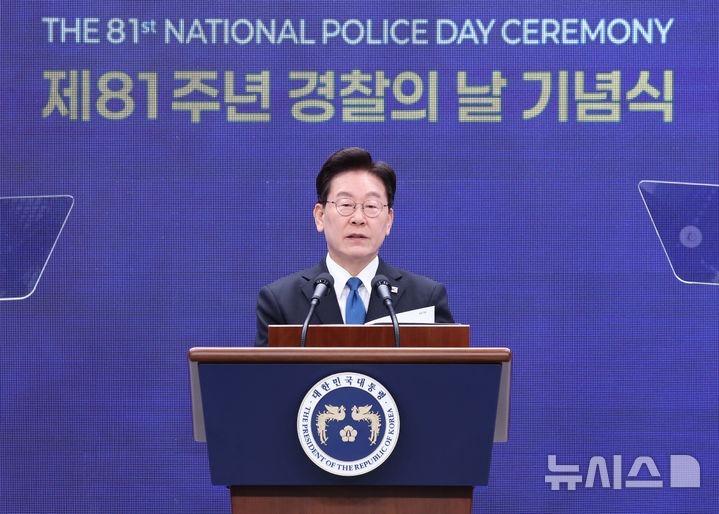
Controversy is spreading over the structure in which the president and investigative agency heads meet weekly at the State Affairs Council. The boundary between administrative supervision authority over investigative agencies and political neutrality has emerged as a focal point.
According to political circles and other sources on the 21st, Kim Ji-yong, director of the Central Investigation Office (CIO), attended the State Affairs Council presided over by President Lee held at the Blue House the previous day. It was the first State Affairs Council attended by Director Kim prior to his inauguration ceremony, after receiving his appointment letter on the 19th.
Attending the meeting were acting CIO Director Lee Jung-hyun standing in for the vacant Public Prosecutors Office Director position and acting Seoul Metropolitan Police Commissioner Kim Jong-chul standing in for the vacant Police Commissioner position. The heads or acting heads of the Central Investigation Office, which handles major crime investigations; the Public Prosecutors Office, which handles prosecution; and the Seoul Metropolitan Police Agency, which handles general crime investigations, all gathered in one place with the president.
Director Kim stated at the State Affairs Council, "I will do my utmost to successfully establish the CIO, complete prosecution reform, and protect the interests of the people."
President Lee instructed Director Kim: "On major crimes, do not distinguish between friend and foe, mobilize all investigative resources without any sacred areas, and take stern action to prove to the people the existence and necessity of the CIO."
The core of the controversy lies not in the investigative agency heads' attendance at the State Affairs Council itself, but in the possibility that such meetings could become regularized.
According to Article 2 of the current "State Affairs Council Regulations," regular State Affairs Councils are convened once per week. If the attendance of investigative and prosecutorial agency heads becomes routine, a structure would be created where the president and the heads of these agencies attend the same meeting each week to share state affairs issues.
In the past, investigative agencies, while belonging to the executive branch, have been recognized for the special nature of needing to maintain a certain distance from political power. This is because the president and other senior government officials could themselves become subjects of investigation.
The past practice of successive administrations not regularly seating the Prosecutor General at the State Affairs Council is also interpreted as considering the political neutrality and independence of investigative agencies.
In particular, the president was already able to receive reports on investigative agency policies and operational status through the Justice Minister and other relevant cabinet members. Additionally, President Lee's State Affairs Council is broadcast publicly, so the main state affairs direction can be understood even without investigative agency heads attending in person.
However, if investigative agency heads regularly attend the State Affairs Council, a direct meeting point with the president would be created beyond indirect communication through the responsible minister.
Even if the president does not instruct investigations on specific cases, investigative agency heads would repeatedly encounter the president's remarks and policy positions at the State Affairs Council, raising concerns about the independence of investigative decisions.
However, it is difficult to view the investigative agency head's attendance at the State Affairs Council as a violation of law.
Article 8 of the "State Affairs Council Regulations," amended on July 7, stipulates that the chair of the State Affairs Council may seat the heads of central administrative agencies and civil servants in important positions when deemed necessary.
This means the president has the authority to have investigative agency heads attend the State Affairs Council. However, some point out that the legal possibility of attendance and the appropriateness of regular seating of investigative agency heads are separate matters.
President Lee directly rebutted these concerns through his SNS on the same day. He posed questions to generative artificial intelligence (AI) about the issue of the Public Prosecutors Office Director and CIO Director attending the State Affairs Council and introduced related responses.
President Lee continued: "All agency heads such as the Forestry Service Director, Fire Commissioner, and Coast Guard Commander attend and discuss matters," arguing "correcting the mistaken perception and practice of giving special treatment to investigative authorities is also normalizing abnormality."
He stated: "The CIO and Public Prosecutors Office are just agency heads who take orders from the president, prime minister, and ministers, and since we will not direct investigations on specific cases, please do not worry," he said.
The intent is that investigative agencies, as members of the executive branch, must be subject to democratic control, and attendance at meetings to share national policy direction does not undermine the independence of investigations.
On the other hand, counterarguments are also raised that investigative agencies' independence cannot be secured merely by prohibiting explicit direction on individual cases.
In a relationship where the president and investigative agency heads meet regularly, the president's remarks and the direction of state affairs operation could serve as a political burden on investigative agencies even without specific investigative instructions.
Civic organization Participatory Democracy also voiced opposition to regular attendance by investigative and prosecutorial agency heads at the State Affairs Council. The intent is that there are concerns about undermining political neutrality, given that investigative agencies may in the future investigate or prosecute the president and high-ranking government officials.
Some in legal circles also point out that regular contact between the president and investigative agency heads could weaken public trust in the fairness of investigations and prosecutions.
The reasoning is that investigative agencies must not only make independent judgments in reality but also secure the trust that investigations and prosecutions are conducted without influence from political power when viewed from outside.
However, as of now, it is known that Director Kim's regular attendance at the State Affairs Council has not been confirmed.
Ultimately, this controversy extends beyond whether the president can have investigative agency heads attend the State Affairs Council to the question of what boundaries should be set between administrative control over investigative agencies and independent judgment on individual cases.
If a structure in which the president and heads of investigative and prosecutorial agencies meet weekly becomes established as a new practice, debate is expected to continue on how to secure the independence of investigations from political power.
Loading comments…