



Electronic Monitoring Among Casualties as Prosecution Service Abolished, 'Inter-Agency Cooperation' Needed...Concerns Over Delayed Enforcement Measures

As the Ministry of Justice issued an official apology regarding the weapons rampage incident involving an electronic monitoring device wearer, concerns are being raised that the restructuring of the criminal justice system following the abolition of the prosecution service may impair the promptness of enforcement measures against electronic monitoring subjects.
Previously, the protection observation agency under the Ministry of Justice could cooperate with prosecutors from the same department to respond to criminal allegations. However, following the abolition of the prosecution service, as the prosecutor's direct investigation function has disappeared, cooperation with external investigation agencies such as police has become increasingly important.
Particularly, given that the suspect in this incident had already been indicted on weapons possession charges prior to committing the crime, the issue of whether risk indicators were detected and whether forced measures such as arrest could have been considered and executed has emerged as a key point of contention.
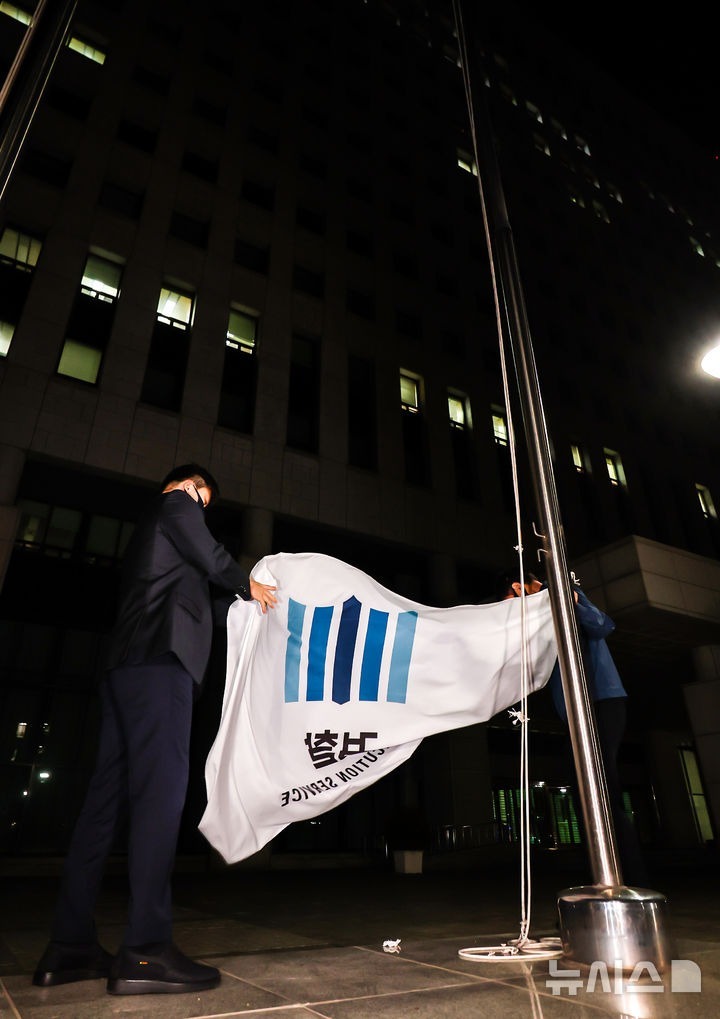
According to the Ministry of Justice and others on the 14th, following the abolition of the prosecution service on the 2nd, a system separating investigation and prosecution was implemented. The existing direct investigation function of the prosecution service under the Ministry of Justice was abolished, and the Public Prosecution Agency under the Ministry of Justice handles functions such as indictment and warrant requests.
Accordingly, even if the protection observation agency under the Ministry of Justice discovers new criminal allegations involving electronic monitoring subjects, cooperation with external investigation agencies such as police is necessary for cases beyond its investigative jurisdiction.
Prior to the abolition of the prosecution service, direct cooperation with prosecutors under the same Ministry of Justice was possible. However, following the restructuring, investigation and warrant requests concerning criminal allegations are now conducted through different agencies. This is why concerns have been raised that forced measures against high-risk subjects could be delayed if inter-agency cooperation is not smooth.
Professor Lee Su-jung of Kyonggi University's Department of Criminal Psychology stated, "Before the abolition of the prosecution service, the protection observation agency could cooperate directly with prosecutors to pursue necessary enforcement measures. However, following the restructuring, cases now pass through the police to the Public Prosecution Agency depending on the circumstances," and added, "In a situation where probation officers cannot directly request arrest warrants and the prosecutor's investigative function has also disappeared, the Ministry of Justice's control over high-risk electronic monitoring subjects could be weakened."
This controversy emerged following the weapons rampage incident involving an electronic monitoring device wearer that occurred in Incheon on the 13th.
At the time, a man in his 50s under electronic monitoring wielded a weapon at a commercial facility, injuring eight citizens.
It was learned that the suspect met with a probation officer on the morning of the incident and had lunch together until around 12:30 p.m. The crime was committed approximately one hour after parting ways with the probation officer.
The Ministry of Justice issued an official apology on the day of the incident, stating it would comprehensively re-examine the electronic monitoring guidance and supervision system and prepare necessary supplementary measures.
The Ministry of Justice also explained that the suspect had neither damaged the electronic device nor violated compliance requirements related to this incident.
The limitations of the electronic monitoring system have been revealed, showing that serious crimes can be committed even while wearing electronic monitoring devices and complying with supervision.
Moreover, prior to the incident, the suspect had been indicted on charges of possessing a weapon while conducting a one-person protest in front of a hospital. This was not merely a situation requiring prediction of crime possibility, but rather a state where actual criminal allegations had already been detected by investigative authorities.
Accordingly, when the protection observation agency became aware of the allegations, and whether it reassessed recidivism risk or considered forced measures such as arrest based on this information, have become important issues of contention.
Criminal Procedure Law allows for arrest warrant requests when criminal allegations and statutory grounds for detention are established, and requires that grounds for detention be reviewed considering the severity of the crime, risk of recidivism, and concerns about harm to victims and others.
Of course, being indicted on weapons possession charges alone does not immediately warrant arrest. However, if the legal requirements were met at the time and lawful arrest was possible, there would have been room to prevent this crime. This is why verification of the pre-response process is deemed necessary.
The problem lies in the future if the number of electronic monitoring subjects increases.
If the scale of high-risk criminals being incorporated into electronic monitoring expands following the government's policy of expanding parole, the management burden on the protection observation agency will inevitably increase.
Professor Lee expressed concern, stating, "High-risk electronic monitoring subjects are continuously being added due to expanded parole. Can the current probation officer workforce sufficiently manage them?"
The potential impact of this incident on other electronic monitoring subjects was also noted. As it becomes known that serious crimes have occurred without violating electronic monitoring compliance requirements, there is concern that other subjects may recognize the limitations of the supervision system and commit similar crimes.
Professor Lee stated, "It is difficult for the Ministry of Justice's electronic monitoring system to operate smoothly with only probation officers," and added, "There is a very high likelihood that similar incidents will continue to occur."


Loading comments…