



Overcoming Resignation Calls, Jang Dong-hyuk Sets Record as 'Longest-Serving' Leadership; Re-election and Primary Authority Face Test
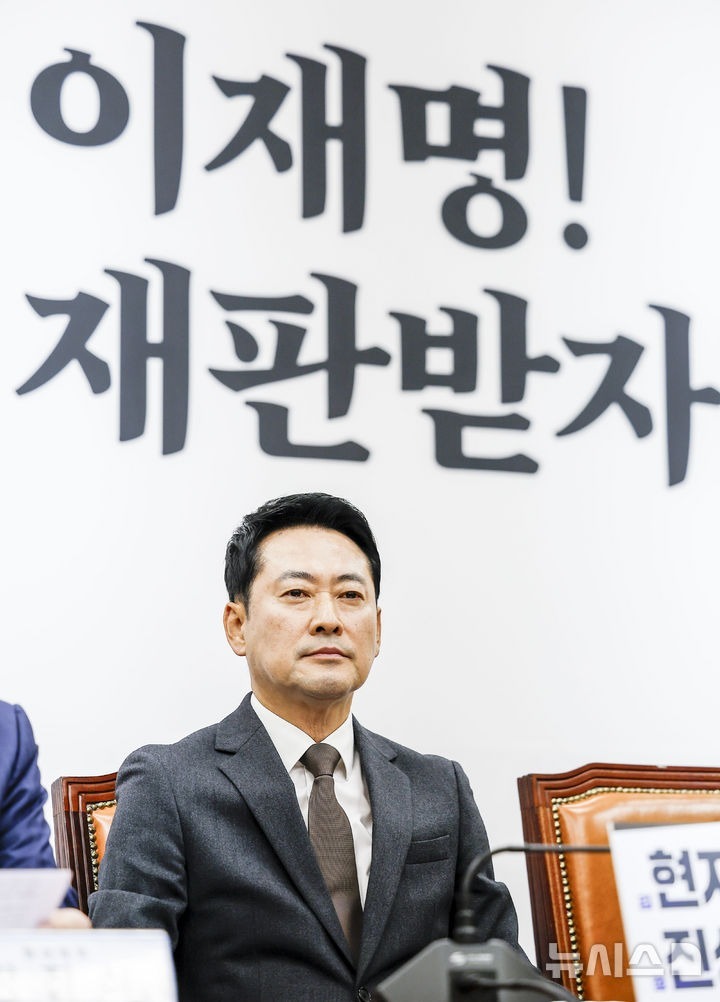
People Power Party Chairman Jang Dong-hyuk has surpassed repeated resignation demands and internal party conflicts since taking office to set a record as the longest-serving party chairman since the People Power Party's launch in 2020.
According to political circles on the 26th, Chairman Jang recorded 425 days of re-election on the 25th, surpassing former Chairman Lee Jun-seok's 424 days. This comes 14 months after being elected party chairman on August 26 of last year.
Since its launch in September 2020, the People Power Party has had no elected party chairman who completed an entire two-year term. Former Chairman Lee served 424 days, former Chairman Kim Ki-hyun 280 days, and former Chairman Han Dong-hun 146 days before stepping down respectively.
Chairman Jang, despite facing multiple political crises since taking office, has maintained his position to become the longest-serving party chairman in the People Power Party's history.
Chairman Jang's past 14 months have been a time of choosing frontal breakthrough over modifying his position under pressure from inside and outside the party.
In December of last year, he continued a 24-hour filibuster in opposition to legislation establishing a special tribunal for insurrection charges, and in January of this year, he went on an 8-day hunger strike demanding acceptance of so-called "dual special investigations" into the Unification Church's political lobbying and the Democratic Party's campaign contribution suspicions.
He did not back down on internal party matters either. Despite ongoing backlash against the People Power Party's Central Ethics Committee's decision to expel former Chairman Han Dong-hun, the Supreme Council made a final decision on the expulsion.
In the June local elections, the Democratic Party won 12 out of 16 metropolitan offices, while the People Power Party secured only 4, leading to growing calls for Chairman Jang's resignation.
However, Chairman Jang made the ballot distribution failure incident in the local elections and management issues by the National Election Commission new agenda items for confrontation with the ruling party. He subsequently focused on consolidating his support base by continuously attending related rallies.
This course of action resulted in mixed evaluations within the party. While some praised him for securing clarity as the opposition party through strong confrontation, others criticized him for escalating internal party conflict and showing limitations in expanding the base to include the moderate middle ground.
Evaluations of the longest-serving chairman record also differed between the ruling and opposition parties.
Democratic Party Floor Leader Han Byung-do expressed congratulations to Chairman Jang at the Supreme Council meeting held at the National Assembly on the day, but criticized him, stating, "The past 14 months have been a time of regression in conservative politics marked consistently by crude remarks, incitement, and talk of fraudulent elections."
Democratic Party Chief Spokesperson Park Seong-jun also characterized Chairman Jang as a "master of endurance" in a statement, downplaying his achievement of maintaining his party leadership despite the local election defeat and internal calls for resignation.
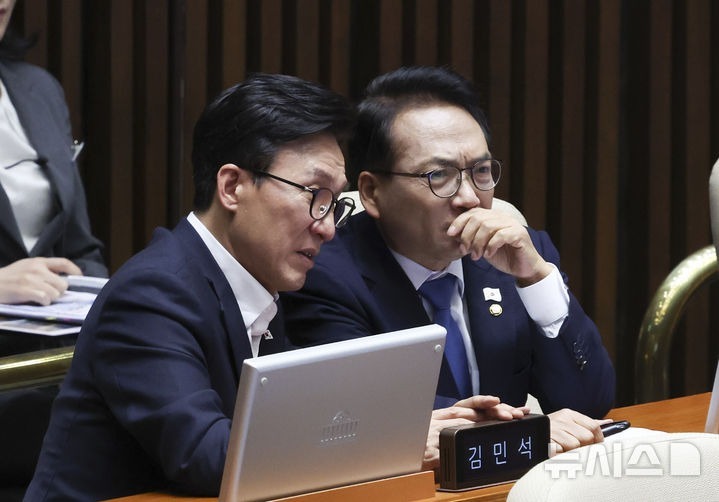
In response, People Power Party Spokesperson Jo Yong-sul countered by raising questions about Democratic Party Chairman Kim Min-seok's internal party leadership.
People Power Party Senior Spokesperson Choi Bo-yun stated, "The duration is not what matters but rather what path has been walked during that time," and evaluated the period as "a year of building a party that can fight when conservatism has collapsed."
However, the party organization reform initiative pushed ahead upon his first anniversary as chairman was scaled down from original plans.
Chairman Jang promoted a plan in August to reelect all 254 party branch chairpersons nationwide and introduce responsible member voting. However, as backlash from incumbent lawmakers and some party leadership continued, rather than a complete reelection, he switched to applying direct elections starting from regions where party branch chairman positions were vacant.
In fact, at the end of last month, the People Power Party's Special Committee for Organizational Strengthening decided to conduct responsible member voting in nine troubled party branches including Gyeonggi Yongin District A.
While the "member-centered party" that Chairman Jang emphasized was partially realized, he was unable to push through nationwide organizational restructuring.
Both inside and outside the party, there is speculation that Chairman Jang may challenge for re-election at the next party convention scheduled for August next year. Given that successful re-election could allow him to exercise influence over the 2028 general election candidate selection process, Chairman Jang's future course is intertwined with the power structure within the party.
However, the need for leadership change continues to be raised primarily by the non-mainstream faction within the party, and issues of conservative unity and expansion to the moderate middle ground remain unresolved.
Chairman Jang is scheduled to attend a memorial service for former President Park Chung-hee on the day and visit former President Park's birthplace in Gumi, North Gyeongbuk on the 30th, continuing his outreach to traditional supporters. At the same time, he plans to pursue policy development through a special real estate committee and policy platforms.
Loading comments…