



INSIGHT "Electrification Does Not Automatically Mean Decarbonization"…Hong Eui-rak, CEO of Korean Gas Corporation, Raises Energy 'Reality Check'
[Energy & Policy] Hong Eui-rak, CEO of the Korean Gas Corporation, who recently completed his parliamentary audit schedule, has raised substantive questions about the realistic limitations and future direction of Korea's energy policy through social media.
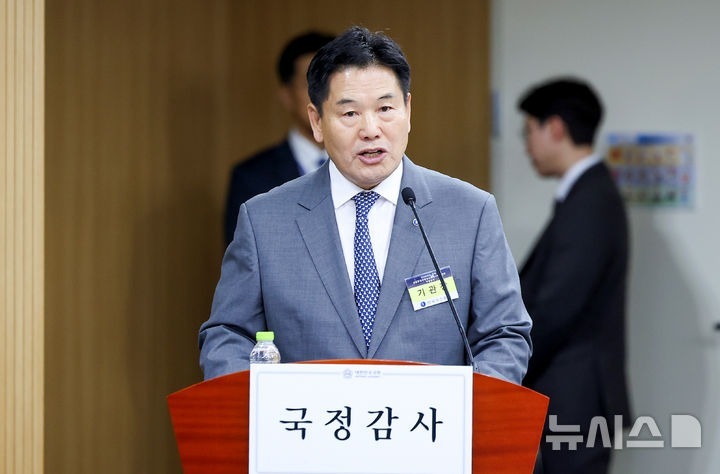
CEO Hong has raised a strong call for a "viable energy transition pathway" based on reality and the bridging role of LNG (liquefied natural gas), while cautioning against policy trends that merely champion blanket electrification and decarbonization rhetoric.
"Electrification and decarbonization are separate issues…LNG's value as a bridge energy must be re-examined"
CEO Hong began by addressing the 'electrification' phenomenon that has become a central topic in the global energy market. While fuel combustion in various sectors such as automobiles, industry, and heating/cooling is shifting to electricity usage, he asserted that "the era of electricity does not necessarily mean an escape from the fossil fuel era."
His reasoning is that electricity is not an energy source in itself but merely secondary energy, and the sources of electricity generation remain coal, gas, nuclear power, and others.
He stated that "electrification is not the most efficient choice in all sectors," and emphasized that energy resources should be allocated considering overall national efficiency, economic viability, and stability, rather than through a binary approach.
While acknowledging the necessity of expanding renewable energy and nuclear power, he underscored that the realistic energy system must be taken into account. CEO Hong advised, "Rather than unconditionally rejecting fossil fuels, we must develop low-carbon and clean technologies and secure the necessary bridges in the transition to clean energy. LNG is not meant to be used forever, but rather we must think carefully about what role it should play in a realistic pathway to clean energy."
"In the AI and semiconductor era, gas for power generation is national competitiveness itself"
He then pointed out that we are entering a structural transition period in which power demand is exploding due to AI, semiconductors, data centers, and large-scale megaprojects.
He presented the proposition that "gas becomes electricity, and electricity becomes national competitiveness," drawing attention to the multifaceted role of gas. He explained that when gas is used not merely as a raw material in industrial settings but for power generation, its price and supply stability have direct impacts beyond simple corporate costs to electricity prices and the national economy as a whole.
CEO Hong warned, "Gas for power generation is not merely a resource, but becomes core to national competitiveness the moment it connects to electricity. If the gas market, ecosystem, and distribution structure collapse or lose their public nature and fairness, it will directly lead to a decline in national competitiveness."
Departing from short-term profit-focused SMP structure…Calling for reforms in power and gas markets
Reflecting on the recent parliamentary audit, he lamented, "Although the gas corporation may have been present at the audit, there was no real discussion of LNG, which is the core issue."
He also raised the point that amid changes in renewable energy expansion and the role of LNG power generation, conflicts of interest surrounding electricity wholesale prices (SMP) are intensifying. He emphasized that "the appeal of SMP itself must not become the goal of the power market." This is because electricity prices transcend the short-term profits of power generators to become the cost base for the entire industry and national competitiveness itself.
Industry observers interpret the head of a state energy company directly raising the need for market reforms from the perspective of public nature in the power system and national industrial costs as significant, given the intensifying conflicts recently surrounding settlement and SMP price structures between renewable energy and private LNG power generators.
Finally, CEO Hong emphasized, "The arrows of energy transition, changing power demand, and the AI era have already been released," and stated, "What we must do now is to carefully read the trajectory of those arrows and coldly verify whether we are heading toward the target." He urged a structural policy redesign at the national level that connects gas, electricity, and industry.



Loading comments…