



IPO Under Microscope ① RideFlux with 4 Billion Won in Sales and 31.4 Billion Won Net Loss, Valuation Under Test
Editor's Note
Autonomous driving startup RideFlux has knocked on the door of KOSDAQ listing. Positioning itself as "Korea's first Level 4 autonomous driving listed company," the company is making this challenge with a financial report showing 4 billion won in sales last year, 31.4 billion won in net losses, and complete capital depletion. Suwon Ilbo is launching the [IPO Under Microscope] series, which verifies the public disclosures and finances of companies that have filed for preliminary examination starting from the review stage.
According to the Korea Exchange, RideFlux submitted a KOSDAQ listing preliminary examination application on the 14th. With Korea Investment Securities and Woori Investment Securities jointly managing the offering, the company received A ratings from both professional evaluation institutions designated by the exchange in May and is targeting a listing within the year through the technology special track.
◆ Sales Double, but Losses Grow Larger
According to the audit report (8th period, 2025) submitted to the Financial Supervisory Service's electronic disclosure system, RideFlux's revenue last year was 4.04 billion won, double the previous year's 2.02 billion won. However, operating loss expanded to 11.9 billion won from the previous year's 9 billion won, and net loss reached 31.4 billion won.
Breaking down the structure of net losses reveals a mix of optical illusion and substance. Of the 31.4 billion won, approximately 20 billion won stems from fair value evaluation losses on convertible redeemable preferred shares (RCPS), which resembles an accounting optical illusion where corporate value increases ahead of listing result in larger losses. Meanwhile, the expansion of operating losses is substantive. As of the end of last year, total capital stood at negative 77.2 billion won, representing complete capital depletion, and of 119.3 billion won in debt, 116.2 billion won consists of RCPS. The structure is such that capital depletion would be resolved if the company successfully lists and preferred shares convert to common shares, but the 2-3% annual return rate guaranteed to investors and conversion conditions could serve as variables in the public offering price calculation process. The company stated, "RCPS is scheduled to convert entirely to common shares during the listing process, and once conversion is complete, the negative capital state will be immediately resolved," adding "conversion negotiations with existing investors are proceeding smoothly."
◆ 60% of Sales from Veiled 'Company A'
The quality of revenue is also a viewing point for review. According to notes in the audit report, of last year's 40 billion won in revenue, 2.43 billion won—or 60%—came from a single customer 'Company A.' The identity of Company A is not disclosed in public filings. All revenue was generated domestically. When asked by this outlet, the company responded, "Due to non-disclosure agreements (NDAs) with major clients, it is difficult to disclose the company name," refusing to confirm Company A's identity. However, the company stated, "The revenue reflects a comprehensive result of business collaboration with private enterprises and demonstration projects by local governments," adding "we are expanding the proportion of repetitive and continuous B2B revenue, such as middle-mile cargo transportation, moving away from a one-off government project-focused structure."
◆ Korea's Sole 'Driverless Permission'...Two to Three Years of Ammunition
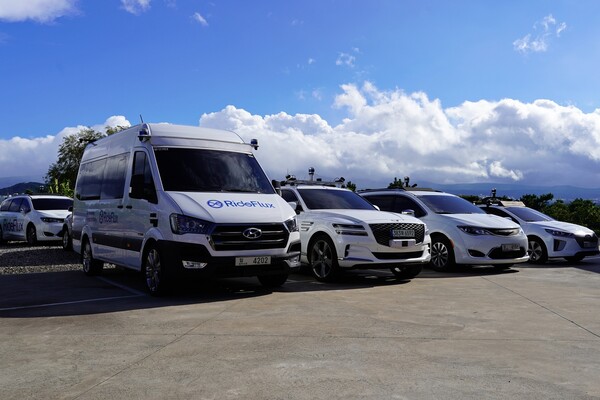
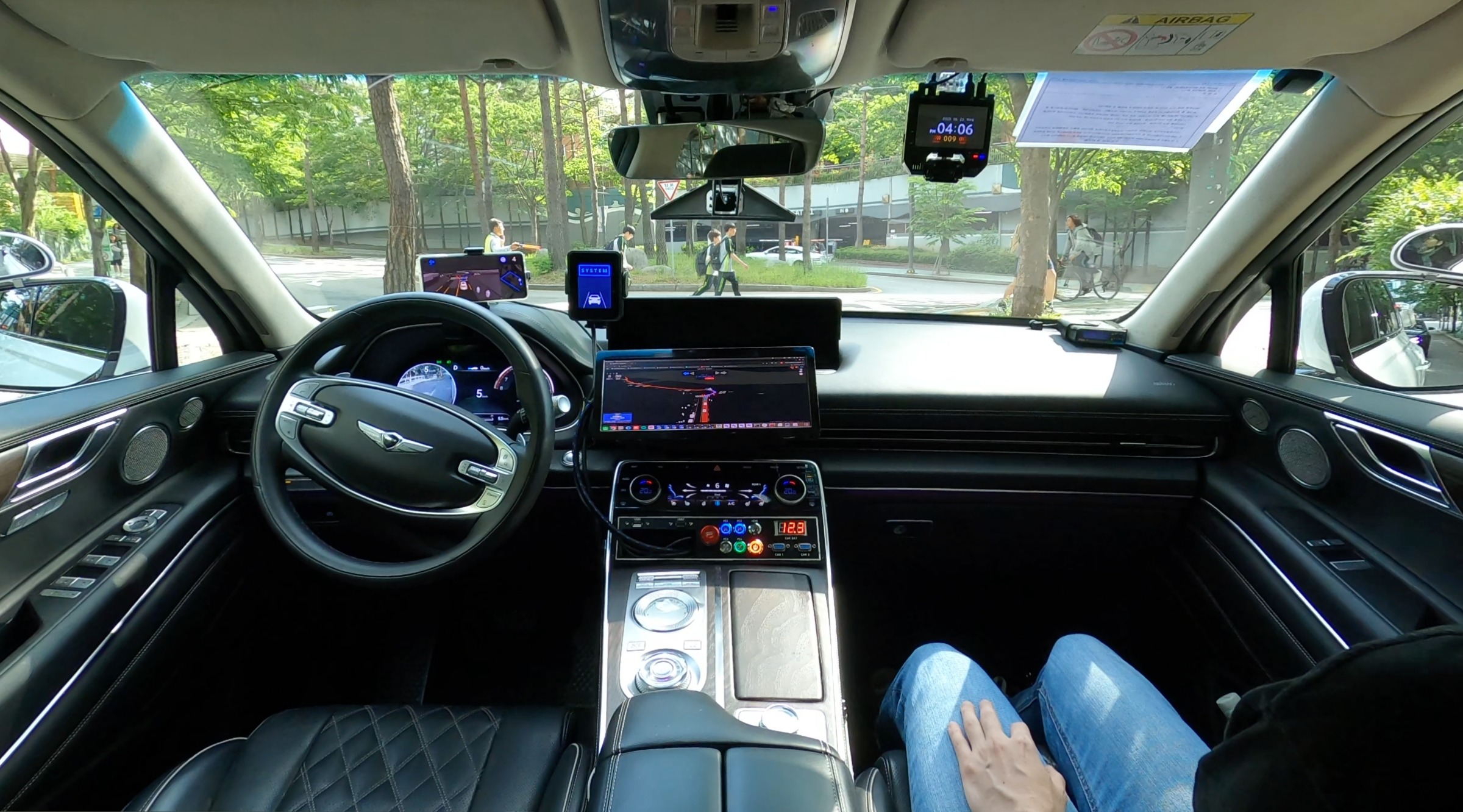
The company's business track record ranks among the most advanced in Korea's autonomous driving industry. Founded in 2018, RideFlux unveiled Korea's first fully public autonomous driving shuttle in Jeju in 2020, and in June 2024, received Korea's sole "temporary driverless autonomous driving operation permit" from the Ministry of Land, Infrastructure and Transport. Beginning in July this year, the company launched Korea's first autonomous truck paid cargo transportation service with Hanjin Express. It holds 100 registered patents.
The company has raised cumulative funding exceeding 75 billion won—165 billion won in Series A, 260 billion won in Series B, and 20 billion won in pre-IPO with Socar as a strategic investor. As of the end of last year, cash and short-term financial instruments amounted to approximately 35 billion won, providing two to three years of ammunition given the annual operating loss scale.
◆ Company States 'Black Profitability by 2028'
Regarding performance outlook, the company has set 2028 as its target year for achieving profitability. The core revenue model is "AI driver software-as-a-service (SaaS)," which supplies autonomous driving software and collects subscription fees. The company stated it is "in discussions with 10 or more logistics and manufacturing companies," beginning with paid transportation with Hanjin in the middle-mile (hub-to-hub) cargo transportation market, estimated at approximately 31 trillion won. The company also plans to launch a driverless robotaxi public service for general citizens in Sangam, Seoul, within the year.
◆ Remaining Verification Points
Verification points remain. The 2025 audit report is essentially the first external audit (2024 marked as unaudited), and Woori Investment Securities, one of the joint underwriters, is managing its first general company IPO since restart, so its capabilities in demand forecasting and price discovery have not been verified. Since a 40 billion won company's valuation can only be calculated based on future estimated profits, there is a high possibility of valuation controversy reemerging at the securities registration statement filing stage. Regarding target corporate value and public offering price range, the company stated, "As preliminary review is ongoing, it is difficult to disclose," adding "the public offering proceeds will be used for AI and data infrastructure investment and securing research and development personnel."
The exchange's preliminary review typically takes around 45 business days. Whether RideFlux clears the review threshold and secures the title of "Korea's first autonomous driving listed company," Suwon Ilbo plans to continue tracking the review progress and securities registration statement disclosures.


Loading comments…