



Editorial Remembering the Spirit of 'Hongik Ingan' and Moving Toward an Inclusive Society Beyond Conflict
[Editorial]
Remembering the Spirit of 'Hongik Ingan' and Moving Toward an Inclusive Society Beyond Conflict
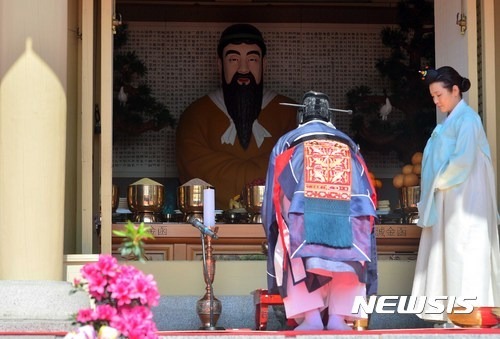
October 3rd is Gaecheonjeol, the day commemorating Dangun's founding of Gojoseon. This day does not merely commemorate ancient history. It is also a day that prompts us to reflect on what kind of community we have built and what kind of society we must create going forward. This is why we reconsider the meaning of Gaecheonjeol in today's world, where conflict and confrontation have become everyday occurrences.
'Hongik Ingan' (broadly benefiting humanity), embedded in Dangun mythology, has long been one of the important values our society has aspired to. The phrase "widely benefit humanity" can be understood as a call to think beyond the interests of the self and one's own group, encompassing the entire community. Though times have changed, the value of respecting one another and finding ways to live together remains valid.
The walls of 'our side' fuel conflict
However, reality is harsh. Our society is increasingly accustomed to dividing people into 'our side' and 'the other side.' When political views differ, many treat the other party not as a conversation partner but as someone to be rejected. It is common to sharpen one's criticism toward the other side's mistakes while turning a blind eye to one's own side's errors. The moment factional logic takes precedence over community interests, conflict easily multiplies.
It goes without saying that the responsibility of the political sphere is great. Politics is meant to mediate conflicts and find compromises in a society where interests collide. Yet if politicians focus only on consolidating their support base rather than persuading the opposition, politics becomes not a solution to conflict but another source of it. The language of division and enmity must not become the everyday tool of politics.
However, blaming only politicians will not yield answers. The face of politics is inseparable from the face of civil society. In a society where citizens cheer rough political rhetoric and consume hatred directed at the opposing camp, it is difficult for politics itself to transcend that level. We must first reconsider our attitude of defending anything if it is from our side and criticizing anything if it is from the opposing side.
Blaming only politics will not change society
Change does not begin with grand gestures. It starts with the thought that what I believe to be true may not hold a monopoly on truth—that the other side's argument may also have merit. It begins with an attitude that allows me to acknowledge my own side's mistakes as mistakes. It is not defining the other person as wrong simply because their views differ; that is the starting point of democracy.
The meaning of Gaecheonjeol can also be newly understood in today's reality. We should not remember 'Gaecheon' (opening the heavens) merely as the literal act of opening the sky, but rather as an opportunity to open our closed hearts and widen the space in which people with different perspectives can live together. Democracy is not an order for people who think alike. Rather, it is a system that continuously asks: how shall we coexist with those who think differently?
Recognizing difference is democracy
The political sphere must move away from politics that exploits conflict. The true mission of politics is to listen to citizens' voices and mediate between different interests. Civil society, too, must not become consumed by political victory and defeat. The victory of the side I support is not necessarily the victory of our community. There are times when finding a way to live together is more important than defeating the other side.
Reviving the spirit of 'Hongik Ingan' in our time cannot rest on grand slogans alone. It must begin by acknowledging people different from myself, not putting only my side's interests first, and looking toward the community as a whole. Trust in society can be recovered only when small acts of consideration and compromise, and the attitude of listening to the other person to the end, accumulate.
There is no society without conflict. What matters is not eliminating conflict but how we handle it. We must be able to recognize differences, engage in dialogue, and make compromises. That is the power that sustains democracy and the power that sustains community.
On Gaecheonjeol, let us reflect on where our society stands. It is time to reconsider whether we are trapped within the narrow confines of 'my world' and 'my side,' turning a deaf ear to the voices of others. The old spirit of 'broadly benefiting humanity' is, after all, not a grand slogan. It is about not rejecting people different from myself, reflecting on the mistakes of my own side, and finding ways to live together.
Opening the heavens is not something done alone. When we open each other's hearts, the heavens of our community also open. May Gaecheonjeol be a day to reconsider this simple yet ancient truth.


Loading comments…