



2026 Nobel Prize Report In the Age of AI, the Nobel Committee's Announcement Questions the Era of Speed and Seeks 'Slow Truth'
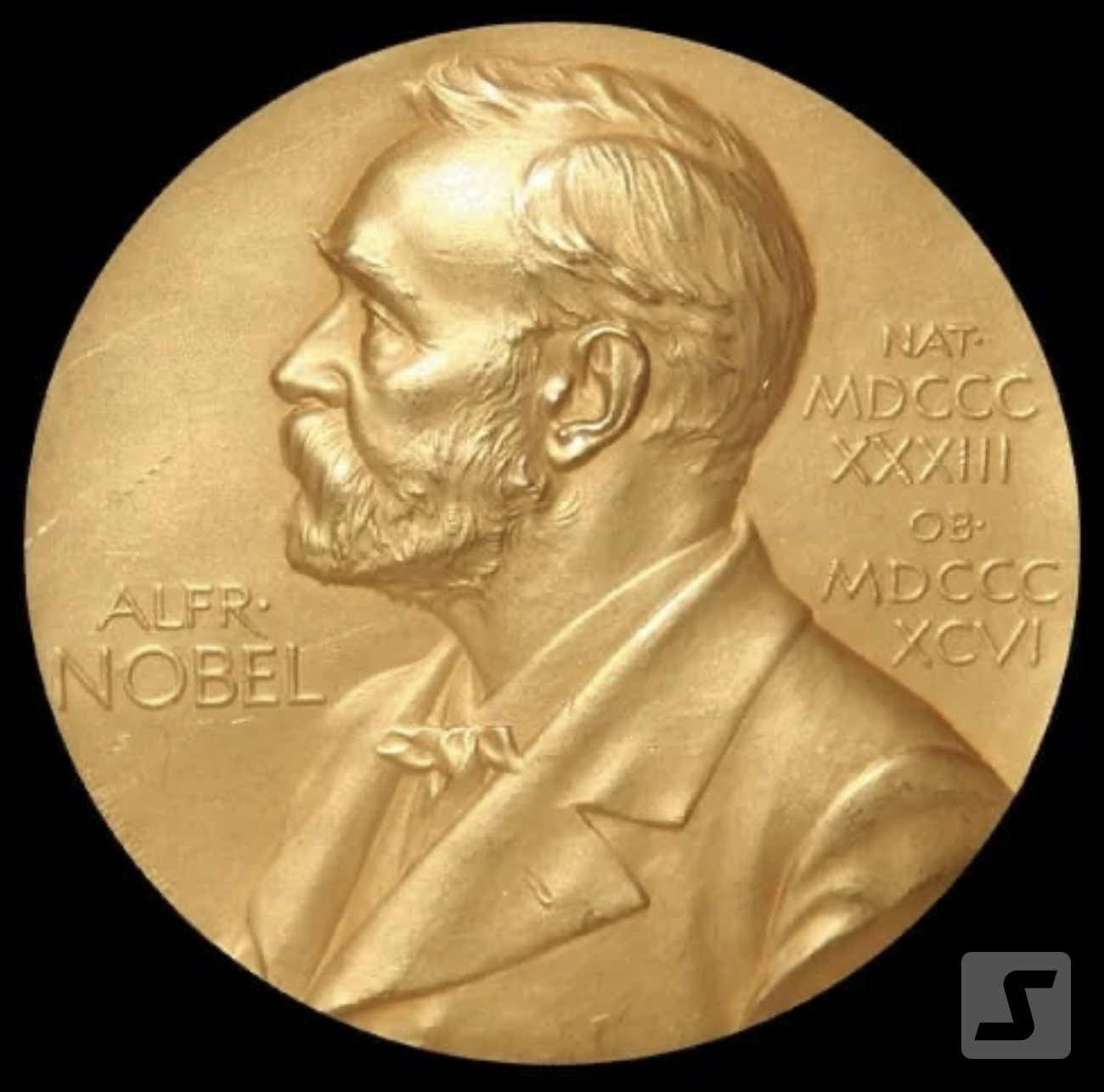
With the announcement of the Economics Prize, all six Nobel Prize categories for this year have been decided. We live in a "hyper-speed era" in which artificial intelligence shortens the pace of new drug development and algorithms redefine all utility in the world. Endeavors that do not immediately yield visible results are apt to be regarded as laggards of the times.
Yet when scrutinizing the official announcements made by the Swedish Academy and the Nobel Committee in 2026, this year's Nobel Prize delivers a fundamentally different consensus to us. The great breakthrough humanity faces has not emerged from the clamor of a "tech boom," but has blossomed upon the soil of basic science accumulated steadily over decades and the weighty norm of human dignity—this is the truth the Committee is conveying.
Using the selection rationales announced by the Nobel Committee as a mirror, this report examines the values that our rapidly changing era overlooks.
Physiology or Medicine, Physics, and Chemistry: Territories of the Microscopic and Macroscopic Pioneered by 'Curiosity and Perseverance'
This year's science categories demonstrated how relentless pursuit of nature's fundamental principles, rather than immediate practicality, broadens humanity's intellectual horizons.
[Physiology or Medicine Prize] was awarded to joint researchers Karl Deisseroth (United States), Peter Hegemann (Germany), and Georg Nagel (Germany), who opened the path to precisely controlling nerve cells with light. Their innovation stemmed from the pure curiosity of biologists observing the light response of single-celled green algae.
[Physics Prize] recipient Professor Francis Halzen (Belgium/United States) embedded a massive eye in the harsh ice of Antarctica to capture cosmic ghost particles (neutrinos), a process that directly demonstrates the power of "curiosity-driven basic research that delves into nature's secrets with no immediate benefit."
[Chemistry Prize] was awarded to Henri Cargan (France) and Soai Kenso (Japan) for their achievement in revealing the secrets of "homochirality"—the origin of life within asymmetric organic synthesis. This accomplishment is the fruit of decades of dedication to microscopic truth, sounding an alarm that a society mired in short-term performance metrics (KPI) can never broaden such profound intellectual territory.
Literature, Peace, and Economics: 'Human Form' and 'Justice of International Law' Extended in an Age of Efficiency
[Literature Prize] highlighted the trajectories of masters who have steadfastly maintained the foundations of humanity within a civilization dominated by efficiency and speed. In 2026, when machines produce tens of thousands of characters of text in a single second, Literature Prize recipient Anne Carson (Canada) has preserved the essence of human language by dissolving the boundaries between classical and contemporary, poetry and essay. The Committee commended her literary world for pioneering new forms of contemporary literature through playful dialogue with classical tradition.
[Peace Prize] recipient Navanthem "Navi" Pillay (South Africa) devoted her life to advancing human rights and international law, and to combating war crimes. As the Committee emphasized, "justice follows peace," and at a time when cold power politics and survival-of-the-fittest diplomacy raise their heads, the steadfast steps of those who have realized through their very being that true peace is not merely the cessation of conflict but is sustained only upon the institutional framework of "international law and human rights."
[Economics Prize] was jointly awarded to Robert Hall (United States) and Michael Woodford (United States), who laid the foundation of microeconomic research for macroeconomic stability, awakening us to the importance of deep theoretical underpinnings that support market fluctuations.
The Value of 'Foundation' We Must Revisit
Each morning, are we not captivated by floods of breaking news, our gaze fixed only on "what is faster" and "which technology raises stock prices"?
Yet the Nobel Committee's official announcements weigh heavily upon us with a question: How much do we cherish the invisible roots that sustain the origins of the world, the human brain, and the justice of society? Beyond the glittering trends before our eyes, the value of "foundation"—the steadfast pursuit of truth over decades—is perhaps the most philosophical year-end report we must return to precisely as technology becomes ever more sophisticated.



Loading comments…