



Diagnosis and Outlook People-Sovereign Government at 500 Days: Bridging the Gap Between '$40,000' and 'Economic Sentiment'
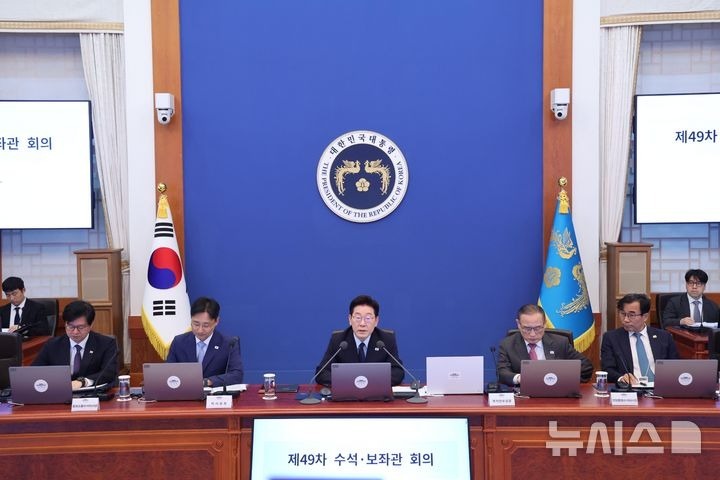
President Lee Jae-myung, marking 500 days since the launch of the People-Sovereign Government, has presented livelihood recovery as the top priority of state affairs. The message that emerged from the chief of staff meeting at the Blue House on the 15th is notable both for reconfirming the direction of state management and for the government itself acknowledging the reality that, despite improved economic indicators, the public's sense of livelihood recovery is slow.
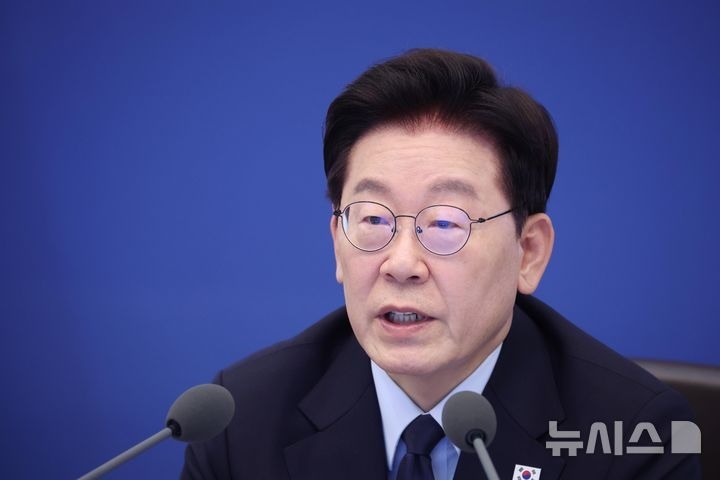
President Lee stated on the day, "Regardless of any external pressures or resistance, we will firmly walk the path of livelihood improvement, practical reform, and inclusive integration." He demonstrated resolve to push forward reform tasks without wavering. However, the success or failure of state affairs depends not on the determination to implement itself, but on whether policies translate into actual results and whether the public can feel those results in their daily lives.
The symbolism of $40,000, separate from citizens' household finances
A notable point in this message is that the president directly addressed the temperature gap between macroeconomic indicators and livelihood conditions on the ground.
President Lee forecasted that this year South Korea's per capita gross national income (GNI) is likely to exceed $40,000, ranking sixth among nations with populations exceeding 50 million. Entering a new income bracket for the first time since surpassing $30,000 in 2014 carries significant meaning. However, this is a forecast rather than confirmed results, and actual achievement must be verified through annual national income statistics.
Above all, per capita GNI is an average indicator of the entire national economy's income level divided by population. It is not a figure that directly reflects individual household incomes, real purchasing power, or income distribution. Dollar-converted amounts are also affected by exchange rates. Even if national income increases, if housing costs, living expenses, and debt repayment burdens grow correspondingly, citizens' sense of financial well-being may not improve.
This is why President Lee diagnosed that despite positive macroeconomic indicators, the pace of livelihood recovery is slow. If macroeconomic gains do not translate into improved circumstances for households and small business owners, it becomes difficult to explain government performance through rising economic indicators alone. What matters now is not only the scale of growth but how evenly its benefits are distributed to people's lives.
Housing, employment, and finance: policy effectiveness is key
President Lee designated housing, employment, and finance as the three major social policies for the remainder of this year and instructed the government and Blue House to concentrate their capacity on them. Key tasks include housing supply tailored to life-cycle demand, job creation encompassing both private and public sectors, and policy financing for working-class and small business owners along with customized debt restructuring.
The three areas are closely interconnected. When housing cost burdens increase, household consumption capacity shrinks. When stable employment is scarce, income recovery becomes difficult. Add to this the burden of loan repayment, and the business and management conditions for households and small business owners inevitably worsen. Therefore, rather than merely listing individual policies, policy effects must be linked in ways that lower housing and financial costs while stabilizing the income foundation.
Housing supply requires not only expanding quantity but supplying adequate-priced housing quickly in areas with actual demand. Employment policy too hinges on whether it leads to sustainable employment rather than project scale or participation numbers. Policy financing and debt restructuring must also be designed considering the debtor's repayment capacity and possibility of recovery, going beyond temporary financial support.
Standards for measuring policy results must also be clear. How much has housing cost burden decreased, how much has quality employment increased, and has debt restructuring actually led to recovery and relief from repayment burdens—these must be shown through concrete indicators. Trust from the public can only be gained by continuing to verify implementation speed and effects rather than stopping at policy announcements.
Political adjustment capability equally necessary as reform momentum
President Lee has emphasized the historical value of democracy, including the spirit of the Busan-Masan Democratic Uprising and the May 18 Democratic Uprising through constitutional preamble additions. Such tasks hold meaning in reaffirming the foundations of democracy, but constitutional preamble amendments require constitutional revision procedures and agreement between ruling and opposition parties. Beyond political declarations, achieving institutional results must be accompanied by sufficient discussion and the formation of social consensus.
Livelihood policies are no different. Housing supply, labor market reforms, and financial support entail fiscal burdens, policy priorities, and differences in positions among stakeholders. Even if the government emphasizes implementation momentum, without consultation with the National Assembly, gathering on-site opinions, and coordination with policy recipients, implementation speed may slow during the execution process or policy effects may be limited.
Cooperation should not, however, become a pretext for postponing reform. Necessary policies must be pursued responsibly, but the process of narrowing differences and reducing side effects must also be accepted as part of state management. Firm implementation momentum and flexible adjustment capability are not opposing values. They are conditions that must be possessed together for creating sustainable results.
Must be evaluated by citizens' lives beyond numbers
The 500-day mark is both a time for the government to look back on past accomplishments and an opportunity to review future state management. The forecast of entering the $40,000 per capita national income threshold is a symbolic indicator showing South Korea's economic growth potential. However, it does not in itself prove livelihood improvement. To assess economic conditions as felt by the public, household income, real purchasing power, employment quality, and housing and debt repayment burdens must be examined together.
For the government's presented livelihood improvement, practical reform, and inclusive integration to go beyond slogans, it must transparently explain policy goals and results to the public and respond responsibly to outcomes that fall short of expectations. Policy delays should not be taken for granted due to political conflict, nor should social conflict be ignored under the pretext of policy implementation.
The task of the People-Sovereign Government beyond 500 days is clear. It is to connect macroeconomic results to household income growth and stable employment, affordable housing costs and manageable financial burdens. What the government must prove is not the $40,000 figure itself. It is answering the question of how substantially that number has actually changed citizens' lives.

Loading comments…