



Choi Hyung-guk's Calzaki (28) Gwonbeop (拳法), the Beginning and End of Cultural-Historical Understanding of Martial Arts
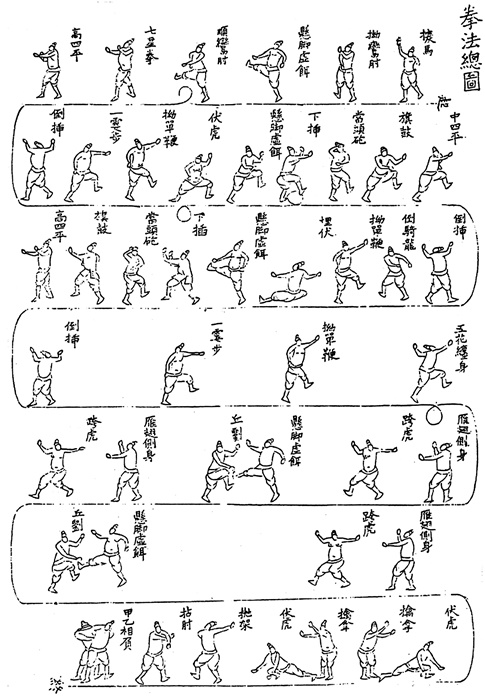
- The Gateway for Beginners to Enter the Art (初學入藝之門)
The fascination with martial arts is powerful. The imagination of a single punch sending someone flying, a single kick shattering a pillar. Yet such imagination is far from easy in reality. Often, the opposite is true. Without even running 100 meters, one's breath comes up to the throat, and in daily life, one rarely raises a foot higher than knee level. That is the daily reality of modern people. This is why it is necessary to practice martial arts like gymnastics in one's daily routine.
In the Joseon era, gwonbeop was trained in military camps much like gymnastics. Gwonbeop, a bare-hand martial art, was the fundamental physical training method for learning all martial arts. For this reason, gwonbeop was considered the "gateway for beginners to enter the art" (初學入藝之門). In other words, it was seen that the process of building the fundamentals of body movement—the gateway through which beginners must pass to learn martial arts—was embedded in bare-hand martial arts. One must first understand one's own body before wielding a sword, axe, or any weapon.
If one becomes obsessed with heavy and sharp weapons without properly understanding one's own body, it becomes not a weapon to subdue an opponent, but a useless gesture that harms one's own body. Martial arts is the act of fortifying and understanding one's own body, filling and governing one's mind. It is the wildness inherent in humans for survival in harsh nature; based on that wildness, martial arts was born as a symbol of the most scientific and practical intelligence. When this is strengthened by faith in one's own body and mind, it develops to the stage of spirituality. This is why martial arts is viewed as a unique 'body culture' of humans.
By examining the gwonbeop practiced by late-Joseon military soldiers, one can glimpse the cultural-historical flow of martial arts. It is similar to researching martial arts culture through taekwondo. The very process of researching how taekwondo was created and disseminated can become a crucial key to reading the martial arts culture of modern Korea. The gwonbeop recorded in 'Muye Dobo Tongji' is based on several books, including 'Jihaoxinzhu' written by Qi Jiguang of Ming China. However, rather than simply copying the movements of that time, it was recorded as gwonbeop that had been adapted to Joseon due to differences in body culture.
When examining gwonbeop more deeply, one can discern its meaning. First, gwonbeop disseminated in late-Joseon military camps was spread in the form of sequences (譜) that directly connected Chinese bare-hand martial arts gwonbeop. This differed from the contemporary gwonbeop training methods found in 'Jihaoxinzhu' and became the foundation for creating possibilities for localization that could be applied to Joseon military tests and evaluations of gwonbeop.
Second, the most important reason Joseon military had soldiers practice gwonbeop was to adopt it as a standard for universal physical training to enable more seamless use of other weapons. In gwonbeop, punching movements are divided according to height into upper level (上平), middle level (中平), and lower level (下平), etc., and this was equally applied to spear techniques (槍法). For example, movements from gwonbeop stances such as high four-level posture (高四平勢) or middle four-level posture (中四平勢) could be directly applied to thrusting heights in long spear (長槍) techniques including upper-level spear, middle-level spear, and lower-level spear. The compass posture (指南針勢) of the long spear could be seen as upper-level (上平), while the ten-fold ambush posture (十面埋伏勢) could be connected to and trained with lower-level spear technique (下平鎗法).
Furthermore, special weapons such as the wolf-thorn staff (狼筅) or the long lance (鐺鈀) required essential basic physical conditioning and enhanced flexibility due to their weight and length. Therefore, gwonbeop training was the most effective training method for converting the ordinary 'body' of soldiers into the martial arts 'body'. This deserves closer examination.
The core technique of gwonbeop in 'Muye Dobo Tongji' was not to obtain powerful striking force. Rather, it was primarily characterized as a type of manual gymnastics for using hands and feet smoothly. A representative example is what is called the yin-yang hand (陰陽手)—the position and form of the rear hand that serves as the foundation when wielding weapons with both hands, and the front hand that determines the direction of attack. This corresponds to the most basic training for learning weapon techniques. Gwonbeop was also the most effective training method for learning the fundamentals of the yin-yang hand. The movements were primarily focused on hand techniques rather than leg techniques, and the stances in gwonbeop could be directly applied when practicing weapon techniques such as spears and swords.
Additionally, gwonbeop stances such as the ambush posture (埋伏勢)—where one lowers the body as if sitting and attacks an enemy with hands or feet—or the crouching tiger posture (伏虎勢) are nearly identical to the body movements of the ambush posture (埋伏勢) or low-level posture (低平勢) of the rattan shield (籐牌). Because of this enhanced weapon utilization capability through gwonbeop, the official military examination (觀武才) included not only gwonbeop in the swordsman (拳法手) killer (殺手) test subject, but also tested whip-staff (鞭棍), fixed knife (挾刀), staff (棍棒), and bamboo long spear (竹長槍). Therefore, the dissemination of gwonbeop in late Joseon can be understood as broadening the range of applications of various short-range close-combat weapon techniques disseminated from Ming.
Third, as the continuous form evolved from sequential moves to a form where two people engage each other by bringing their bodies together and matching timing—a combat form—it transformed into more practical movements. In particular, as not only simple striking techniques but also grappling techniques involving joint manipulation or restraint at close range were added, the utility of gwonbeop expanded further.
Furthermore, just as the saying goes—'gwonbeop has defined postures, but in actual combat there are no defined postures'—through gwonbeop training, one can understand the 'posture' (勢) that is most important in combat and weapon techniques. This means that while there are 'postures' defined for training purposes, when applying them in actual combat, there are no 'postures'.
That is, in actual combat, one must apply diverse variations based on the situation, building on training. In actual combat, one cannot subdue an opponent using taekwondo patterns like 'Koryo' or 'Kumgang'; rather, it means one must respond flexibly to situations by applying the various movements contained within those patterns.
Finally, the most distinctive characteristic of late-Joseon gwonbeop's establishment was that the state took the leading role in disseminating gwonbeop. This was a unique method of martial arts transmission and establishment found only in Joseon, unseen in other countries such as China or Japan. Through this, Joseon's gwonbeop could take root more quickly through military soldiers, and it could be stably practiced as subjects in various military examinations such as the official military examination (觀武才) and military selection tests (試取).
- Cultural Transformation of Gwonbeop Begins with Children's Play
Although Chinese gwonbeop was disseminated to Joseon soldiers, it naturally became adapted to Joseon and established itself as another body culture. Such phenomena of change in martial arts are natural. This is why martial arts should be examined as part of 'culture'. If Chinese culture and the foundational culture of Joseon are different, then even if the same gwonbeop was disseminated to Joseon, it is entirely natural for it to become naturally adapted to Joseon over time.
The 'Muye Jebo' (Martial Arts Manual), the first martial arts treatise created in Joseon during the Japanese invasions, explains the cultural phenomena of martial arts in this way: 'Our people use spoons when eating, while Chinese people use chopsticks. If we were to have Chinese use spoons and our people use chopsticks, each would surely feel some discomfort, because it is a matter of familiarity and unfamiliarity. If this is true for the use of spoons and chopsticks, how much more so for the use of swords and spears? Although archery is our country's specialty, how can we perfect only that one and abandon other martial arts?' Thus, the unfamiliarity with changes in martial arts culture was compared to the food culture of 'chopsticks and spoons'.
To overcome the Japanese invasions, the Joseon military had to quickly introduce Chinese gwonbeop into military camps. However, the Chinese body movements, which were foreign to us, did not easily spread. So Joseon took extraordinary measures. They began to disseminate gwonbeop through children's play.
Looking at the 'Seonjosillok' (Annals of King Seonjo), one can glimpse how diverse methods were explored to disseminate gwonbeop. 'Gwonbeop is a martial art for cultivating courage. If we have young children learn it, then village children will imitate and practice each other, making it play, which will be beneficial in the future. Select children to learn these two martial arts and have them receive instruction from General Yi Jung-gun as before. Instruct the Training Command (Hullyeondogam) accordingly. Subsequently, mark two diagrams concerning the staff and gwonbeop from 'Jihaoxinzhu' and distribute them, instructing that this method be shown to the Training Command.' This passage can be found in the records.
In this way, cultural dissemination is possible not through coercion, but only when culture naturally permeates the grassroots foundation. Naturally, in that process, Chinese body movements became enjoyable play and were newly transformed to fit the bodies of Joseon children. Thus, gradually, Joseon's gwonbeop spread through alleyways.
Martial arts is a body movement that governs the body to fill the mind. It creates strong, resilient ligaments and muscles, and bones, freeing the body. Within that body, courage and self-respect are cultivated. No matter how excellent and beautiful one's thoughts may be, they can only find their proper place when realized through a healthy body.
At that foundation lies gwonbeop, a bare-hand martial art. The stamina to endure the weight of heavy weapons with one's own two hands and the quick reflexes to rapidly defend against a sharp enemy's weapon are developed through gwonbeop. Going a step further, martial arts is learning through the body a way of enjoying tedium while caring for the body. Within martial arts training lies the strength to endure a tedious and harsh life. Therefore, if one learns martial arts with enjoyment and fun, life too becomes enjoyable. This is the fundamental reason why I have practiced martial arts for so long.
'When prepared, there is no worry' (有備無患)—if one is adequately prepared beforehand, there is no concern. The same applies to health. One must maintain health while healthy; only when one becomes ill and exhausted is one's true value revealed. If one acquires the body movements one truly needs through martial arts practice, another world of the body will unfold.
* Thank you for reading 'Choi Hyung-guk's Calzaki Column' thus far. I am taking a brief respite from writing to attend to my body. Next time, I will return with more spirited and abundant stories. If you wish to encounter deeper discussions about martial arts in book form, I recommend my works 'Martial Arts Humanities', 'Jung-yeok Muye Dobo Tongji—King Jeongjo, Communicating with Martial Arts', and others. My homepage is http://muye24ki.com. I sincerely wish you always good health in body and mind.
Loading comments…