



Kim Chung-young's Suwon Microscope (140) The History of Suwon's Wastewater Treatment Plant (Part 1)
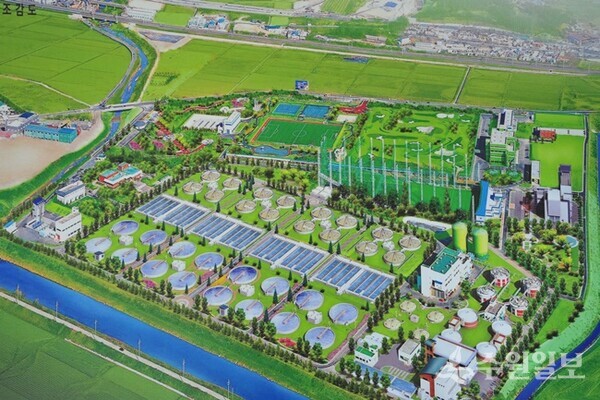
Until the early 20th century, human average life expectancy was 30 years, but by the early 21st century, it increased to over 70 years. Research shows that it was not medical technology but the expansion of water and sewage systems that extended human life. With the provision of water and sewage systems, water contamination could be prevented, reducing the impact of cholera, dysentery, and typhoid.
Traces of sewage systems have been found in the four ancient civilizations of humanity. In Korea, there is a historical record that "Stream Construction Project" was implemented in 1411, the 11th year of King Taejong's reign, to safely protect the capital from flooding. By the time of King Sejong, when a creek passing through the fortress wall became blocked and caused flooding, a "Second Stream Construction Project" was implemented. Records of dredging work on the buried Cheonggyecheon during the reign of King Yeongjo have been preserved.
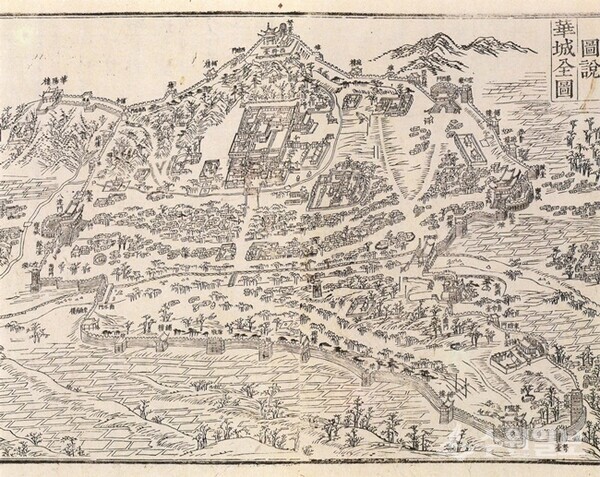
In Suwon, construction of a new town in Suwon began on July 15, 1789, to develop Hyungneung, the tomb of Crown Prince Sado. Although detailed construction records have not been preserved, five years later, during the construction of Hwaseong Fortress, roads were expanded and ditches were created on both sides of the roads. To facilitate drainage, the Suwon stream was dredged and stone channels were created to direct water from inside the fortress to the outside. This was a project pursued to enable smooth drainage rather than wastewater treatment.
With modernization, sewage facilities were introduced to Korea. After the Byeongja Treaty of 1876 with Japan and the subsequent signing of treaties with the United States in 1882 followed by Britain, Germany, Russia, Italy, and France, the number of foreigners visiting Joseon increased significantly. The first impression Westerners had of Joseon was its uncleanliness. The issue that foreigners commonly pointed out was the dirty condition of roads, with problems caused by stench from abandoned garbage and sewage.
Due to the poor sanitary conditions, cholera broke out in 1895, resulting in the death of 300,000 people. Those who pointed out the poor conditions and uncleanliness of urban environments at that time were figures like Kim Ok-gyun and Park Young-hyo, who served as Susin-sa (diplomatic envoys). After observing the management of sanitation-related facilities in the United States and Japan, they emphasized "Governance Methods" consisting of three principles: first, hygiene; second, agriculture and commerce; and third, development in the road sector. The governance projects they advocated were not realized due to the failure of the Gabo Reforms.
Korea's full-scale sewage system project began in 1915 when Gyeongseongbu established a "Seven-Year Sewage System Improvement Plan." This project was promoted by 1918, which became the "First Sewage System Improvement Plan." Subsequently, it was promoted through several phases. At this time, both open sewers and underground sewers were reviewed, but the more cost-effective open sewer method was applied. Thereafter, until wastewater treatment plants were built, Korea proceeded with a combined system for draining rainwater and sewage.
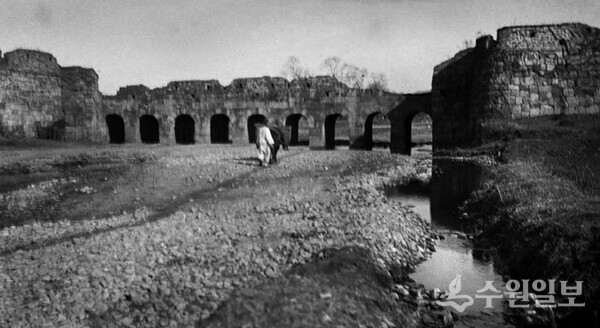
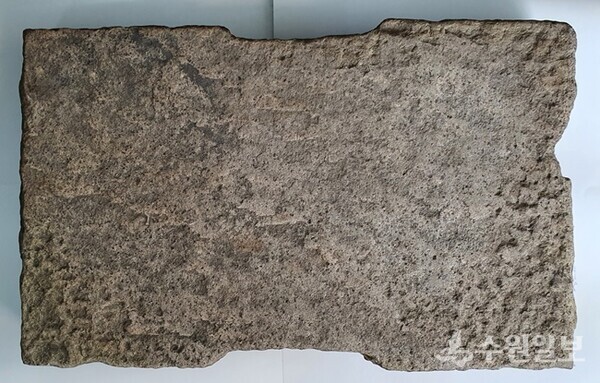
Sewage system projects in provincial cities were introduced in the 1920s. In Suwon, "when the Namsumun Gate was destroyed by the Eulchuk Flood of 1922, stones from the Namsumun Gate were collected and used for sewage projects. The stones from the Namsumun Gate were thinly split and used as covers for U-shaped open sewers on both sides of National Route 1 from Jangamun Gate to Paldalmun Gate," as testified by Mr. Yun Han-heum, who painted old scenes of Suwon.
Suwon's sewage system project primarily involved installing open sewers on both sides of main roads and covering them with lids, while underground sewers were laid in the center of minor roads. Data on Suwon's sewage system does not appear in 1966 statistics, but according to 1967 Suwon City statistics, sewage length increased from 106,606 meters in 1965 to 119,846 meters in 1966, and with open ditches (side channels) at 29,044 meters, it can be seen that until land subdivision projects were implemented after the Gyeonggi Provincial Government relocated to Suwon in 1967 to accommodate rapidly increasing population, no substantial sewage system was installed.
The "First Comprehensive National Development Plan" in 1972 included sewage system plans, and for large cities, making wastewater treatment plants mandatory was included to prevent river water pollution.
Based on this, the construction plan for the "Cheonggyecheon Wastewater Treatment Plant" was established and implemented, and the Cheonggyecheon Wastewater Treatment Plant was completed in 1976.
The completion of the Cheonggyecheon Wastewater Treatment Plant made it clear that local major cities could no longer overlook civil complaints due to river pollution. At the time, the Ministry of Construction (now Ministry of Land, Infrastructure and Transport) conducted a pilot project before fully implementing sewage work improvements, targeting Ulsan, an industrial city.
In 1983, the Ministry of Construction issued a directive for a second-phase wastewater terminal treatment plant construction plan targeting provincial capitals and major cities. It was at this time that I, after working in the Urban Planning Division for a long time, was promoted to rank 7 and worked in the Construction and Sewage Section, thus beginning my connection with Suwon's sewage work. At that time, Suwon's sewage work was truly at an elementary level.
To construct terminal wastewater treatment plants and sewage pipes, enormous financial resources were needed, making securing tax revenue an urgent priority. To smoothly implement the work, I visited Ulsan City with Park Soon-yong, an administrative level 8 official working with me, and received detailed plans for projects that had been implemented so far.
▷The first task undertaken was creating a "Sewage System Map" that carefully investigated existing sewage pipes. ▷The second task was designating drainage areas where public sewerage was installed based on the sewage system map, which was for collecting sewerage fees. ▷The third task was designing a sewage trunk line to transport sewage to the treatment plant based on the created sewage system map. ▷The fourth task was selecting the location of the wastewater treatment plant considering topography and implementing the project.
In 1984, I visited the Economic Planning Board (now Ministry of Strategy and Finance) to secure the budget needed for wastewater treatment plant construction. When I told the official in charge of Gyeonggi Province that "river pollution in Suwon is serious and we came here because a wastewater treatment plant is necessary," the official asked, even before hearing detailed explanations, "What would happen to the Republic of Korea if Suwon does not build a wastewater treatment plant?" He then added an explanation: "This office is not so much about providing budget support as it is about reducing requests that exceed the national budget, and the timing is not yet right."
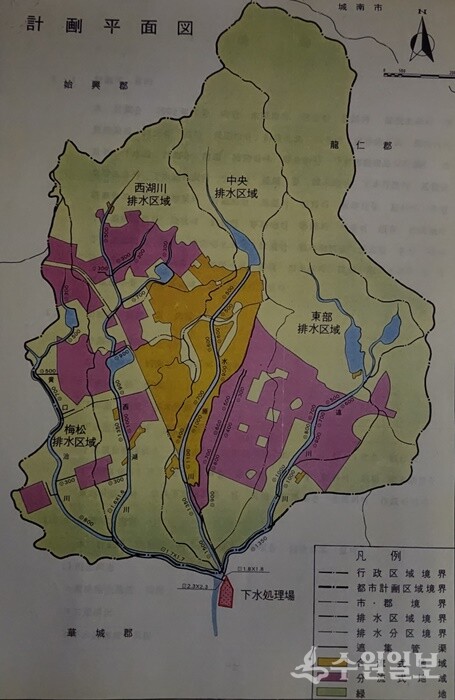
Nevertheless, Suwon City proceeded step by step with establishment of sewage basic plans, creation of sewage system maps, tariff calculation projects for sewerage fee collection, and design projects for sewage trunk lines. To formally implement sewage work, Suwon City upgraded the Construction and Sewage Section to the Sewage Division on October 31, 1985.
On that day, I moved to the Urban Planning Division, my specialty department. (To be continued)
Loading comments…