



Suwon Original City Regulations and Property Rights Issues; 'Floor Area Ratio Trading System' as Solution
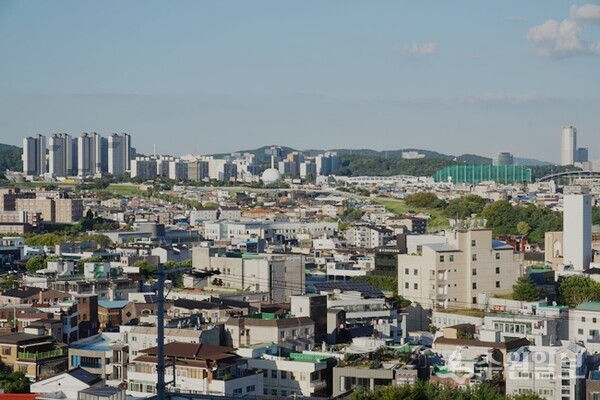
[Suwon Ilbo = Reporter Lee Min-jeong] As South Korea's urban development process encounters both the necessity for regulations to preserve national cultural heritage and issues of residents' property rights infringement, the proposal that the 'Floor Area Ratio Trading System' is a solution for 'historic and cultural cities' is drawing attention.
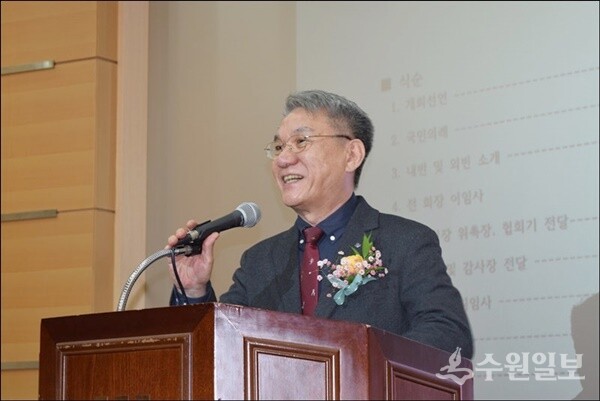
Seo Ju-ho, Vice President of the Hwaseong Research Institute and Chairman of the Gyeonggi Branch of the Korean Architects Association, recently proposed solutions to address problems in the original downtown area, using the Suwon Hwaseong District as a research subject in his doctoral dissertation titled 'Floor Area Ratio Trading System Research in Historic and Cultural Cities.'
According to Dr. Seo, the 'Floor Area Ratio Trading System' is a system in which restricted floor area ratios or unused floor area ratios in areas regulated for the protection of national heritage can be sold to development areas that require them.
As a system that trades 'floor area ratios' rather than 'development rights,' it is a method that allows the public to purchase floor area ratios from preservation districts when implementing regional development that relaxes land use regulations or increases development density. Dr. Seo stated that through the Floor Area Ratio Trading System, it is possible to establish a system that sustainably preserves national heritage while compensating residents for property losses, enabling historic and cultural cities to continue developing.
First, he examined the 'transmittable floor area ratio value' in the Suwon Hwaseong District area. If transmittable floor area ratios have no value, the effectiveness of the 'Floor Area Ratio Trading System' would be diminished.
Additionally, he conducted a citizen awareness survey to understand the effects that citizens perceive when the 'Floor Area Ratio Trading System' is implemented.
The dissertation, including research results verifying the 'transmittable floor area ratio value' and the 'mediating effect of the Floor Area Ratio Trading System shown in citizen awareness surveys,' researches the basis for introducing the 'Floor Area Ratio Trading System,' proposing sustainable development policies in historic and cultural cities.
Dr. Seo stated, "The 'Floor Area Ratio Trading System' can resolve the issue of residents' property damage compensation without financial burden on local governments, while also playing a role in sustainable development of historic and cultural cities."
As research results showed that 'transmittable floor area ratio value' is calculated to a very large amount, it can be an effective method when establishing urban regeneration projects and redevelopment plans centered on Suwon's original downtown.
It was empirically verified that the 'Floor Area Ratio Trading System' has a 'partial mediating effect' by influencing 'sustainable development.'
Therefore, when Suwon adopts the 'Floor Area Ratio Trading System,' both the current and future generations can enjoy better lives, and the results of a 'sustainable development city' will be realized.
Dr. Seo emphasized the need for a paradigm shift in thinking, viewing regulated 'floor area ratios' for 'preservation of national heritage' as another asset, and recognizing through the 'Floor Area Ratio Trading System' that 'loss compensation' of residents' property rights is equivalent to 'preservation' of 'national heritage.'
He also suggested the need to review a 'Suwon-type Floor Area Ratio Trading System' while simultaneously resetting district designations in a unified manner. The current inconsistency between the 'National Designated Heritage Current Status Change Allowance Standards' in the 'Historic and Cultural Environment Preservation Area' and the 'Suwon Hwaseong District Unit Plan Zone' represents wasteful factors that lead to unnecessary disputes due to urban management confusion and complexity.
Dr. Seo proposed a policy that, in connection with the designation project for the Haenggung-dong Coexistence Cooperation District, provides both the 'transmittable floor area ratio value (amount)' and 'hanok support funds' together, encouraging the construction of more hanok (traditional Korean houses) that align with the purpose of the 'Suwon City Hanok Support Ordinance' in first-class general residential areas within the fortress, thereby improving residents' living environment conditions.


正在加载评论…