



Choi Hyung-guk's Saber Talk (23) Waving Flags Are Dreams, Hope, and Commands
- The Philosophy and Symbolic System Embedded in Flags
"Come forth, independence fighters, hurry and go forth The long-awaited war of independence has returned
For this moment we have waited, and for ten long years The day has come to test the sharp blade we have honed
Come forth, soldiers of the Republic of Korea Freedom, independence, and liberation shall be ours this day
Where the righteous taegeuk flag waves The enemy's forces shall fall like autumn leaves"
This is a passage from the 〈Song of Independence Fighters〉, sung by independence fighters who struggled for the liberation of their homeland during the severe period of Japanese colonial rule. For them, the taegeuk flag was a crystallization of dreams, hope, and full morale. The day when the taegeuk flag fluttered freely across the mountains and rivers of the homeland would be the day of liberation.
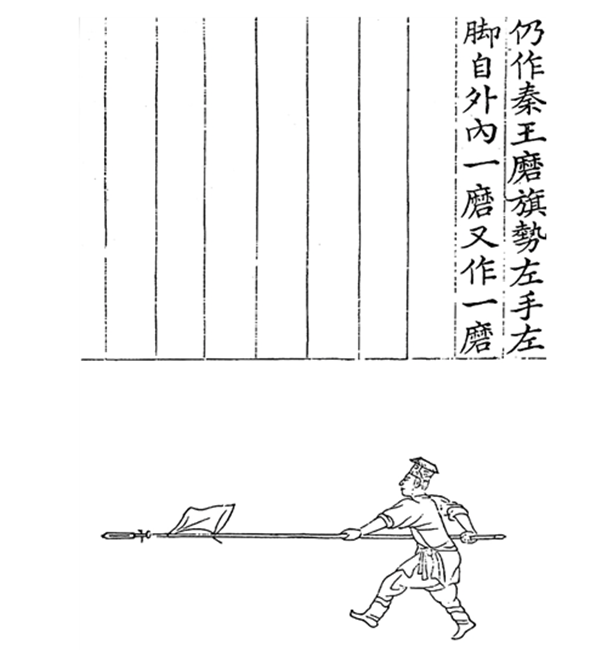
Among the 24 techniques of Muye in 『Muye Dobo Tongji』 (Illustrated Manual of the Martial Arts), there is a martial art called Gi-chang (旗槍, flag spear). It was a weapon in which a flag was attached to a short spear to attack the enemy. However, in the military signal system, flags held very important significance. They were not merely striking in their appearance as they fluttered in the breeze, but rather contained the core of the military command system within them.
Most commonly in the traditional era, there were colors that symbolized the four directions and the center. These included the left azure dragon (左靑龍), right white tiger (右白虎), south vermillion bird (南朱雀), and north dark warrior (北玄武). Additionally, yellow or gold symbolized the center. Based on these fundamental symbolic colors, military units were distinguished. For example, the vanguard attack unit used a red flag, the defending unit used a black flag, and the wing units on left and right used white and blue flags respectively.
In 『Gyechuk Jinseol』(癸丑陣說), a military treatise from early Joseon, there is a method of dividing each unit by flags. It states: "When responding to enemy forces in battle, each unit (隊) displays a different flag: the mounted archery unit (騎射隊) takes the blue flag, the mounted spear unit (騎槍隊) takes the black flag, the fire lance archery unit (火㷁弓手隊) takes the white flag, and the infantry spear long sword unit (步槍長劍隊) takes the red flag."
By distinguishing units by flags in this way, it became easy for commanders to send signals to the corresponding flag units. Even now, historical dramas on TV sometimes show a commander shouting "Charge!" until his voice breaks before units numbering thousands or tens of thousands, but such a command method would be impossible. The typical method was for commanders to direct units by holding aloft a flag representing the unit's movement and displaying specific movements.
Therefore, when entering the military in the traditional era, the first thing one had to learn was to understand the movements of flags. Among the military treatises left by Jung Do-jeon (鄭道傳), who was called the designer of the Joseon dynasty, there was content about the flag signal system that was preserved as a military song (軍歌) to more easily disseminate it to soldiers. This was the Flag Signal Song (旗麾歌). Its content is as follows.
- Flag Signal Song (旗麾歌)
麾色有五旗亦五(Signals have five colors, flags too have five,)
指揮以麾應以旗(Command by signal, respond by flag)
中黃後黑前則赤(The center is yellow, the rear black, the front red,)
左靑右白各隨宜(The left azure, the right white, all in harmony)
東西南北視麾指(Observe the signals pointing to the four directions,)
擧則軍動伏止之(When raised, the troops move; when lowered, they halt)
揮則騎步皆戰鬪(When waved, cavalry and infantry alike engage in battle,)
或徐或疾將所期(Slow or fast is determined by the commander)
將不知此棄其兵(A commander who does not know this abandons his troops,)
兵不知此亦失時(Soldiers who do not know this also miss the moment)
多多益辦非他事(The more who understand, the better, and it is nothing else but
細聽金鼓明旗麾(Listening carefully to bells and drums and clearly observing the flags.)
When the flag is raised, troops must advance; when that flag is lowered, they must halt where they stand. If soldiers do not understand such a basic signal system, they become a disorganized mob.
Looking more closely at how military signals were transmitted using flags, there were methods such as Li (立), Yan (偃), Dian (點), Zhi (指), Mo (磨), Hui (麾), Juan (捲), and Ying (應). First, Li (立) is when the flag is held upright in normal times; Yan (偃) is when the flag is laid down; Dian (點) is when the flag is tilted toward a direction and then raised again before touching the ground; Zhi (指) is when the flag is dipped down and held at a height just touching or near the ground.
Mo (磨) is when the flag is waved to the left; Hui (麾) is when the flag is waved to the right; Juan (捲) is when the flag is rolled up; and Ying (應) is when subordinates receive the commander's flag signal and repeat it, conveying it again to junior officers. Particularly in the military signals of late Joseon, for the most important flag, the recognition flag (認旗), performing Mo (磨) meant that junior officers should run to their commander, while performing Hui (麾) meant they should scatter and return to their original positions.
In addition, there were advance agreements about how to move with each flag action. When the flag is raised, troops move; when the flag is lowered, they halt; when the flag is waved from left to right, they attack; when waved from right to left, they defend; when the flag continues to point in a direction, they focus on attacking that direction—the system contained various military signal meanings.
- The Bravest Soldiers Were Flag Bearers
Therefore, in the Joseon dynasty, the most courageous and skilled military personnel were assigned to the role of signal troops. The enemy's first target was also the soldier responsible for signals. If the flag bearer fell in battle and the military signal system collapsed, that unit often faced total annihilation. Particularly even today, the flags symbolizing each unit are always present on the battlefield, and when a unit retakes a position, the first thing they do is raise the flag to visually announce the occupation.
For this reason, in modern warfare, the first target is also the enemy's command and communication system. Since electronic communication facilities predominate, the electromagnetic pulse bomb, called EMP (electro-magnetic pulse), is the first to pierce the sky.
The flag spear, or Gi-chang (旗槍), is created by attaching such military signal flags to a spear. Therefore, the movements of the flag spear also include movements directly applied from military signal techniques. A representative example is the "Ma (磨)" movement in 'Jinwang Magi-se (秦王磨旗勢)'. The 'Jinwang (秦王)' that appears here is a name used during the era when Emperor Taizong of Tang Li Shimin (李世民: 559-649) became famous in battles before ascending to the throne as emperor of the Tang dynasty.
Generally, in military flag operations, Mo (磨) means waving the flag to the left, and Hui (麾) means waving the flag to the right. Therefore, in the flag spear, it refers to the movement of swinging the spear outward toward the inside so that the flag flutters, aiming at the spear blade. While many understand the spear simply as a thrusting tool, it was also frequently used by laying the spear blade on its side and using it horizontally like a sword to slash.
However, when commonly using a spear with a flag attached to the blade, it is difficult to execute precise attacking techniques. Because the flag experiences air resistance, when swinging precisely, it can actually produce the opposite effect. For this reason, if it were not for military signal purposes, the flag would be removed or replaced with a very small flag.
Therefore, in the final passage explaining the flag spear in 『Muye Dobo Tongji』, the following content was added: "Therefore, when the army's formation has each commander hold their weapons and practice defensive postures in succession, attaching a blade to the spear shaft with the flag attached is to transmit the technique of striking and thrusting, and would it not be better than not doing so? Even a hoe and a wooden club can become military weapons."
In the above passage, this is explained metaphorically to mean that even farming tools like a hoe or wooden club can be used in battle, so a spear with a flag attached is not entirely useless either. It may seem somewhat like an awkward excuse from one perspective, but from the standpoint of verifying martial arts, it is admirable that such minor details were all recorded.
If it helps future generations, even if it is a small thing, it is because our ancestors left records, and that is why we exist now. My study of martial arts history is also filled with the hope that it becomes a small stepping stone in the stream of knowledge for someone walking this path in future generations. If they step upon my work and unfold even broader and more vigorous study, the martial arts of this land will become freer.
Loading comments…