



Column Is Oh Se-hoon's Second Trial Acquittal a Fair and Just Judgment According to Law?
[Now in the Era of Moon]—14
"In dubio pro reo (In dubio pro reo)."
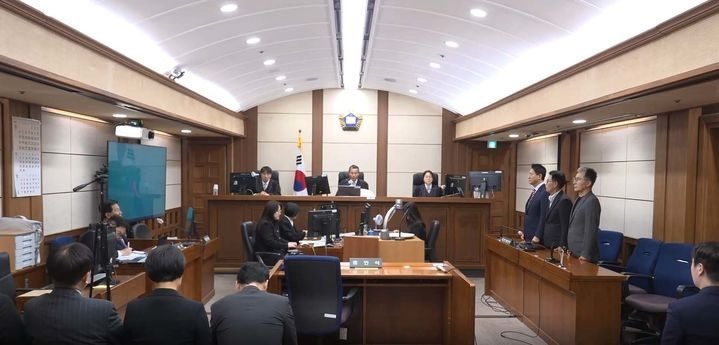
Common Sense and Expectations of the Law
This is not an attempt to debate Oh Se-hoon's guilt or innocence. Where there is guilt, there should be guilty; where there is no guilt, there should be innocent. This is the common sense of ordinary people and their expectation of the law. When ordinary citizens face conflicts large and small in their lives, they say, "Let's do it by the law." This stems from a belief that the law is just and fair.
So I ask: In this ruling, the court cited the Latin legal maxim "In dubio pro reo"—that is, the fundamental principle of criminal law that "when in doubt, judgment shall favor the defendant." Is this fundamental principle truly applied equally and consistently to everyone in our society without exception?
A Tilted Playing Field: 'The Defendant's Benefit' as Privilege
This noble principle of modern criminal law was created as a citizen's shield to prevent the state from crushing innocent individuals with its power. However, today it is hard to dispel the suspicion that this shield is being misused—not to protect the socially vulnerable, but rather as the most sophisticated rampart allowing the legal cartel and those in power with vast resources to escape the net of justice.
What plunges the people into deeper despair is why the standards of legal application differ so extremely depending on the court and judge. When a case condemned as guilty in the first trial becomes acquitted—as if turning one's hand over—based on the orientation or interpretation of the appellate court, that is closer to a "luck-based judiciary where fate hinges on which judge one faces" rather than objective justice under law. If the law, which should be fair and predictable for all, sways this way and that depending on individual judges' discretion and breadth of judgment, can it truly be called authentic "justice under law"?
The law claims formal fairness, but the playing field is tilted from the start. Within the iron-clad defense constructed by large law firms charging tens of millions of won in legal fees and networks of lawyers with prior government service, those in power monopolize the privileged resources to carve out "1% of doubt." Meanwhile, for ordinary defendants with little opportunity for argument, that "1% stroke of luck" is nothing but a luxury.
Silent Sanctuary: A Judiciary Without Reflection
Yet the judiciary maintains silence in the face of this massive distrust and cynicism. What genuine reflection is the judiciary undertaking regarding rapidly declining public confidence in the judicial system? As if it were an "infallible sanctuary," it refuses to acknowledge error, hiding merely behind the mechanical shield of "strict application of legal principles" while ignoring the gap between public common sense and legal sentiment.
Why does intense debate and controversy erupt every time a judgment is handed down? Is it not ultimately because the majority of citizens cannot empathize with that judgment?
Just as law does not exist for law's sake, a judgment must not become an isolated fortress existing only for itself. Law must ultimately aim toward universal justice that citizens with common sense can sympathize with and consent to.
But what is the reality today? When judicial judgment fails to gain public empathy, each person's thoughts and logic become factional weapons with which to assail one another and wage fierce conflicts. What remains in the end is only the division of a torn community and deep wounds of conflict that make our society increasingly miserable.
Citizens' Warning and the Path Forward for the Judiciary
In George Orwell's novel "Animal Farm," there is a deceptive commandment revised by the dictatorial pigs:
"All animals are equal. But some animals are more equal than others."
Can we not ask whether today's judicial reality likewise exhibits a perverted privilege that reads, "All defendants are equal before the law. But some defendants are more equal than others"? Our society must never fall into an "Animal Farm" that, under the guise of sophisticated legal reasoning, justifies the privileges of the vested interests alone.
Now the judiciary must step outside the walls of silence and defense and begin painstaking self-examination and reflection. It must abandon the arrogance of regarding itself as an infallible sanctuary and adjust to the level of common sense to which the people can relate.
If the judiciary ultimately avoids self-reflection and remains hidden behind the ramparts of vested interests, citizens' demands for reform will intensify, and an unfortunate history of reform by the sovereign people may repeat itself. Citizens have driven out unjust power through candlelight revolution and weathered democratic crisis through the light revolution, a history they bear.
All defendants must be truly equal before the law. Yet if that equality acts only as "generous benefit" uniquely toward those with power and assets, and if the judiciary continues to render judgments divorced from the spirit of the times and social empathy, then rule of law becomes not a norm sustaining society but another form of violence. The judiciary must now realize that true justice is not confined within cold legal text but breathes only in the empathy and trust of the people.




Loading comments…