



Column France Burning: When the Warmth of Classrooms Goes Out, Democracy Falters
[This is the Age of Cultural Discourse (文話)]-13
Autumn 2026: the European continent is trembling.
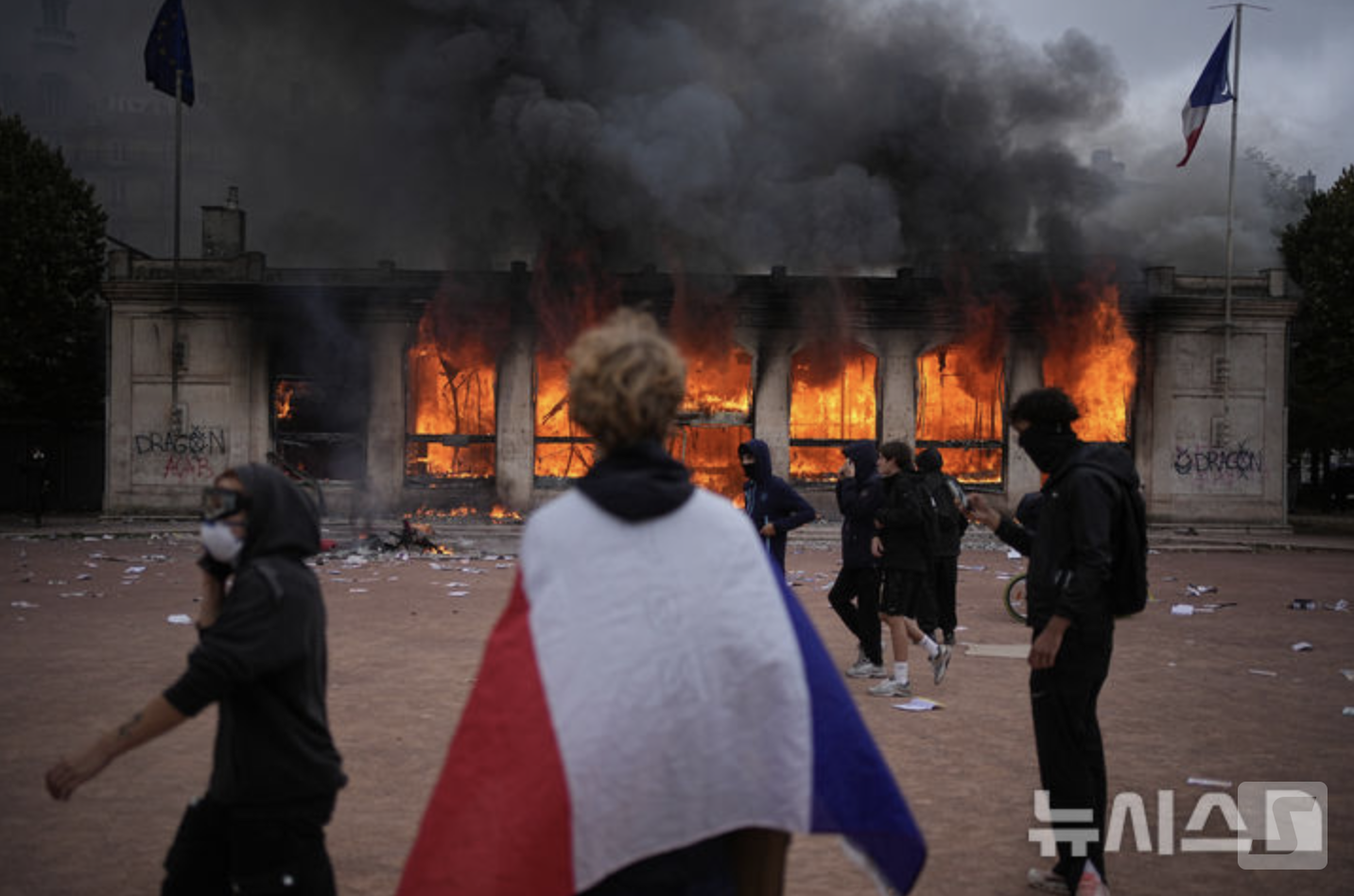
It started in a high school classroom in Créteil, on the outskirts of Paris, France. After months of unfilled teaching positions and heating being shut off, teenage students locked the doors. The small, modest spark of anger spread across Paris within mere weeks and ignited throughout Europe—in Belgium, Italy, Spain, Portugal, and beyond.
Perspectives on the situation are sharply divided. The government and security authorities point to agitation by certain extremist forces and criminal acts of looting, justifying the deployment of state force. Meanwhile, civil society and progressive factions counter that it represents a legitimate outpouring of public sentiment from youth pushed to the brink of survival. Yet without examining the structural causes beneath the surface of violence, we cannot grasp the true nature of these cascading riots.
Cold Classrooms and Soaring Oil Prices: The Spark That Ignited
The trigger for this incident was neither a major political scandal nor grand ideological confrontation. It was the starkly real despair born of skyrocketing oil prices driven by geopolitical crisis and the "deterioration of everyday public services."
As oil and energy prices surged due to prolonged war aftereffects, logistics costs and food prices rose in tandem, pushing ordinary citizens' livelihoods to the breaking point. Furthermore, the French government's 61 billion euro fiscal austerity package—adopted to curb inflation and reduce sovereign debt—added fuel to the fire.
As high oil prices and soaring inflation eroded already diminished lives, when even the minimal safety net of public budgets was cut, the students' protest that began with locked classroom doors rapidly spread to workers and ordinary citizens struggling with livelihood crises.
The flames that crossed borders likewise gained momentum by combining with each country's inherent instabilities: Italy's low-wage structure, Spain's explosive housing rental costs, and more. The common thread binding European youth and working-class citizens is clear: the deep sense of loss that no matter how hard one works, life does not improve, and the state cannot even provide a minimum social safety net.
Looting and Arson: The Shadow of Anger That Erodes Legitimacy
Yet the arson and shop looting occurring throughout urban centers under cover of night represent another facet of this situation. While these cannot be dismissed as mere deviant crimes, neither can they be romanticized as legitimate expressions of justified anger.
Indiscriminate violence in riots is a typical symptom of "social anomie" that emerges when trust in institutions is lost. When helplessness peaks—the sense that one's voice goes unheard in national affairs amid high prices and high oil costs—protest transforms beyond orderly assembly into destructive forms.
The problem is that arson and looting undermine the legitimacy of the protest itself. By destroying the livelihoods of ordinary small business owners and neighborhood residents, they forfeit public sympathy and provide the government with justification to suppress anti-austerity voices while exercising powerful state force. The moment anger loses reason, the message one sought to convey vanishes into the smoke over the city.
Reading the Absence of Integration Beyond Political Stigmatization
An observation by France's leading newspaper Le Monde offers important insights into understanding the true nature of this incident. As the situation escalated, some political forces and foreign media attempted to stigmatize it as an "uncontrollable immigrant problem" or "racial conflict." However, Le Monde criticized this framing as a political tactic designed to conceal complex structural causes.
The core cause identified by Le Monde is "accumulated failure of the social integration system." Over decades, amid fiscal austerity, housing insecurity in marginalized areas, educational gaps, and youth unemployment were neglected; public services were withdrawn. The result is a collapse in the bond between state and citizens. The true nature of this incident lies not in the identity of any particular group, but in the absence of policy that could preserve the universal value of public welfare amid economic crisis.
What is the State? A Cautionary Tale for Korean Society
The tragedy in Paris is by no means a distant concern for us. Korean society, which depends heavily on external supplies of energy and raw materials, must be mindful of the social costs that arise when emphasizing only fiscal soundness and efficiency amid external economic crisis while shrinking essential safety nets such as education and welfare. The social conflict costs incurred when the state abandons its role as a bulwark of basic livelihood far exceed budget savings.
Furthermore, when national governance fails to address the helplessness of a younger generation exposed to high prices, housing shortages, and employment insecurity, social instability can only intensify. We must also remain vigilant against political tactics that attempt to reduce complex structural conflicts to hatred of specific groups or mere security issues.
The solution to overcome crisis amid increasingly sophisticated social demands and complex interests is not far away. The true qualification of democracy depends entirely on the capacity to coordinate differing conflicts not through violence but through dialogue and the political will for compromise, grounded in substantive communication with the people.
Beginning with "classrooms and shopping baskets" and leaving stains of arson and looting, this riot is a stern warning from the younger generation questioning the state's reason for existence. Only by moving beyond temporary measures of stigmatization and state force deployment—and instead constructing a robust social safety net in response to geopolitical uncertainty and engaging in substantive political dialogue—can we break the cycle of repeated tragedy.


Loading comments…