



Kim Min-seok Under Leadership Test After a Month in Office
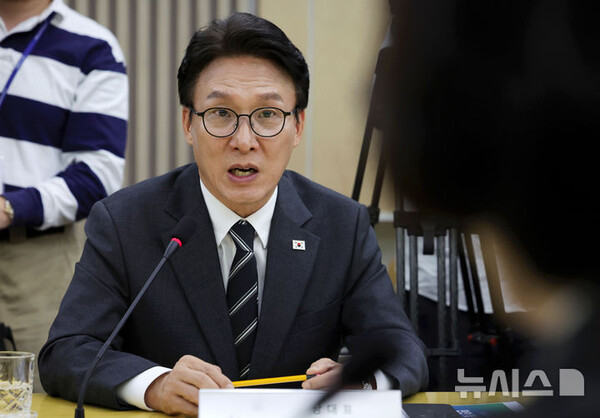
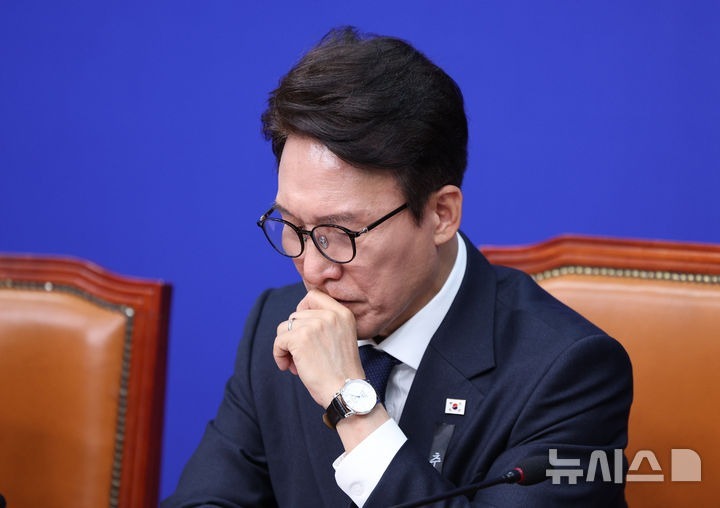
Kim Min-seok, chair of the Democratic Party of Korea who took the helm of the ruling party under the banner of 'party-government stability,' is facing his leadership credentials tested as he encounters the fallout from the personnel confirmation hearings, public clashes with Choo Mi-ae, Gyeonggi Province governor, and internal leadership conflicts just over a month into his tenure.
Chair Kim was elected party chair on the 17th of last month at the Democratic Party's general convention with 54.08%, defeating candidate Jung Chung-rae (45.92%). At the time, resolving internal party discord deepened during the convention process while supporting the state affairs momentum of President Lee Jae-myung's administration, entering its second year, were cited as key tasks for the new leadership.
Chair Kim also placed emphasis on party unity immediately after taking office, stating, "There are no factions and I will not consider them." He emphasized that personnel decisions would be merit-based and that the gap between party sentiment and public sentiment would be narrowed.
However, in the process of supporting government personnel as the ruling party, discrepancies appeared between the party's and the presidential office's judgments.
On the 17th, the Democratic Party led the adoption of the confirmation hearing report for Justice Minister nominee Kim Seung-won in the National Assembly's Legislation and Judiciary Committee as the People Power Party lawmakers withdrew. The Democratic Party held the position that major allegations surrounding nominee Kim were addressed at the hearing.
However, on the 18th, the day after the report's adoption, President Lee Jae-myung stated at a press conference regarding nominee Kim's appointment, "I have not yet reached a final conclusion," and said he would make a careful decision considering public expectations and other factors. He also indicated that the personnel system would be reviewed again.
It appeared that President Lee applied brakes just a day after the Democratic Party pushed through the report adoption and effectively backed the appointment.
Ultimately, nominee Kim withdrew from candidacy on the 19th, saying "I fell short of public expectations." It was 20 days after his nomination and two days after the hearing report was adopted under Democratic Party leadership.
While the party defended the candidate and adopted the hearing report, the situation rapidly changed with the president's statement for reconsideration and the candidate's withdrawal, leaving controversies over the ruling party's political judgment and coordination between party and government.
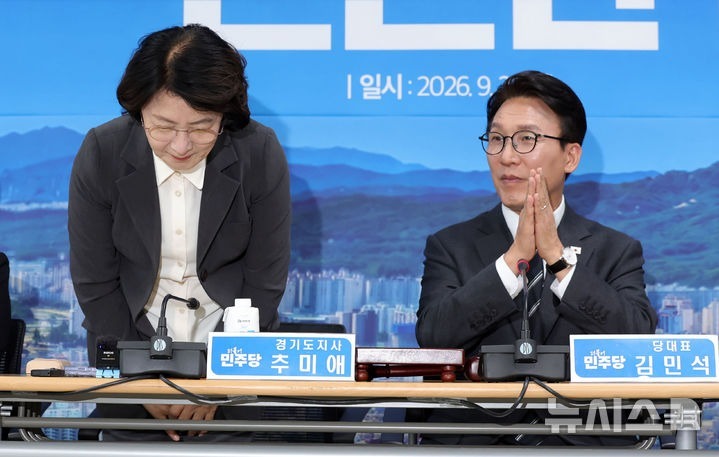
Within the party, public confrontation with Gyeonggi Province Governor Choo Mi-ae is continuing.
Chair Kim, who faced candidate Jung Chung-rae at the general convention, has recently been in repeated public confrontation with Governor Choo.
When Governor Choo publicly criticized President Lee and the government's prosecution reform and personnel direction, Chair Kim strongly rebutted on the 14th, stating "It is a time to unite our strength," even bringing up circumstances surrounding the impeachment of former President Roh Moo-hyun. He viewed Governor Choo's concerns as a matter of unity within the ruling bloc, transcending simple policy differences.
Subsequently, the exchanges between the two sides extended beyond prosecution reform to Governor Choo's election consulting costs and Gyeonggi Province policy matters. As an incumbent provincial governor leading the nation's largest metropolitan local government and the ruling party chair faced off directly, Chair Kim is now required to demonstrate political acumen in coordinating differing opinions within the party.
Particularly significant is that Governor Choo is exercising an independent voice based on the nation's largest metropolitan local government rather than the central party or National Assembly, making how Chair Kim manages internal party conflict an important variable in gauging his leadership.
Such conflicts did not suddenly begin recently.
Three days after taking office, on the 20th of last month, Chair Kim announced Jeon Yong-gi and Kwon Mi-gyeong, chairwoman of the Korean Confederation of Trade Unions National Public Service Coalition union federation, as appointed supreme council members, but some council members openly objected, saying "there was no consultation."
Supreme Council member Choi Min-hee requested reconsideration, asking, "How can a proper resolution be made if the appointment of appointed supreme council members, a matter for supreme council deliberation, is suddenly disclosed at the general meeting without minimal consultation?"
Just four days after the general convention ended, conflicts over decision-making methods surfaced within the new leadership. The Kim Min-seok regime, launched under the banners of 'party-government stability' and 'party unity,' began from its initial stages bearing the task of internal coordination.
Over a month in office, miscoordination between party and government over personnel matters, public clashes with senior regional leaders, and decision-making controversies within the leadership have emerged in succession, requiring Chair Kim to demonstrate leadership in coordinating the entire ruling party beyond responding to individual issues.
A political circles insider stated, "Chair Kim was elected on the platform of party-government stability and party unity, but various conflicts have surfaced during his first month in office," and added, "It is now an important moment to demonstrate that he can stably lead the entire party beyond responding to individual issues."
Loading comments…