



Choo Mi-ae Considering 'Emergency Discipline'...Kim Min-seok Says "Political Judgment if Necessary"
![[Seoul=Newsis] Reporter Choi Jin-seok = Democratic Party Chairman Kim Min-seok enters the Supreme Council meeting held at the National Assembly in Yeouido on the 12th. 2026.10.12. myjs@newsis.com](https://www.suwonilbo.kr/img/write/pdd89ff1da819749d6231f2ce8dfa2c7ad6b87350.jpg)
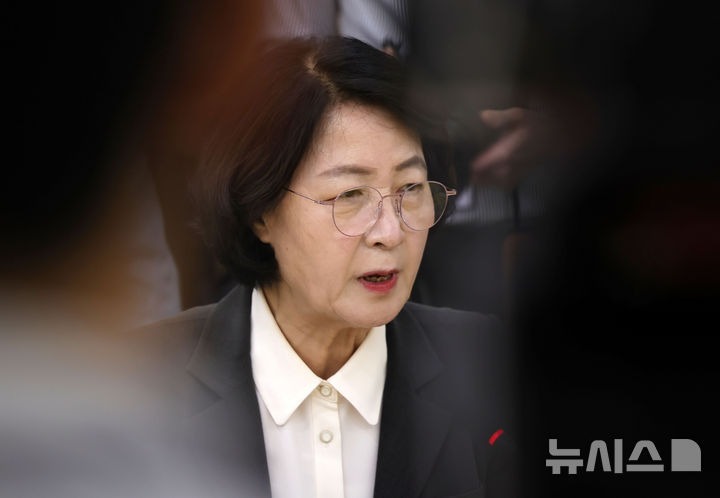
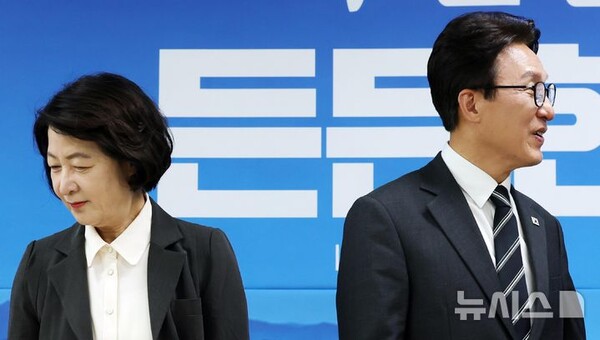
Democratic Party Chairman Kim Min-seok has raised the possibility of actual disciplinary action by mentioning "political judgment" regarding criticism of the government by party members including Gyeonggi Province Governor Choo Mi-ae.
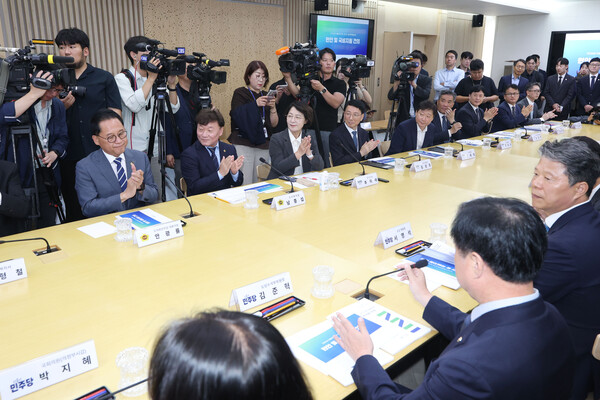
According to political circles as of the 13th, Chairman Kim reportedly said in a closed-door leadership meeting the previous day, "Let's watch until tomorrow's confirmation hearing for the nominee, and then make a political judgment if necessary."
Some interpreted this as suggesting the possibility of party-level discipline if public opposition to the nomination of Kim Ji-yong, candidate for the Chief of the Serious Crime Investigation Office, continues.
Chairman Kim also said on the party's official YouTube broadcast on the same day, "I receive really countless remarks asking why we're staying silent or why we're letting this slide, filled with urgency," and "Many people are feeling that we have reached a threshold of effort."
However, it remains unclear whether the "political judgment" refers to actual discipline. No specific disciplinary level such as suspension of party membership or expulsion has been presented.
The issue is that political judgment and discipline according to party rules are separate spheres.
Article 14 of the Democratic Party Rules No. 7, "Ethics Tribunal Regulations," stipulates grounds for discipline including violations of party constitution and rules and party directives and decisions, violations of party platform and party line, spreading false information or undermining party unity through insulting remarks, major obstruction of party affairs, and damaging the party's reputation.
Therefore, to target Governor Choo's remarks as subject to discipline, it must be specifically demonstrated how the conduct violates the relevant provisions.
In particular, to determine opposition to Kim's nomination as a "violation of party line," it must first be confirmed whether there is an official party line regarding the nomination. Disagreement with or public criticism of presidential appointments does not automatically constitute a violation of party rules.
The disciplinary process is also not structured to be decided solely by the party chairman's political will.
Article 75 of the Democratic Party Constitution stipulates that the Ethics Tribunal performs its duties independently from the party's representative bodies and executive bodies. Article 77 grants the Central Ethics Tribunal the authority to examine, resolve, and decide on sanctions proposals.
Under party rules, discipline consists of four types: warning, suspension of party positions, suspension of party membership, and expulsion. Current local government officials can be subject to discipline regarding party membership status, but party discipline does not automatically result in loss of elected public office.
However, Article 32 of the Ethics Tribunal Regulations stipulates that when there are grave and evident grounds for discipline during extraordinary times such as elections, or when there is concern that serious problems will arise for the party if not handled urgently, the party chairman can directly impose discipline through a Supreme Council resolution.
This is so-called "emergency discipline" that bypasses the general Ethics Tribunal review process.
In fact, the Democratic Party decided on an emergency discipline of six-month suspension of party membership through a Supreme Council resolution in November 2023 regarding controversial remarks by former lawmaker Choi Kang-wook.
Meanwhile, public calls for party-level discipline against Governor Choo have emerged.
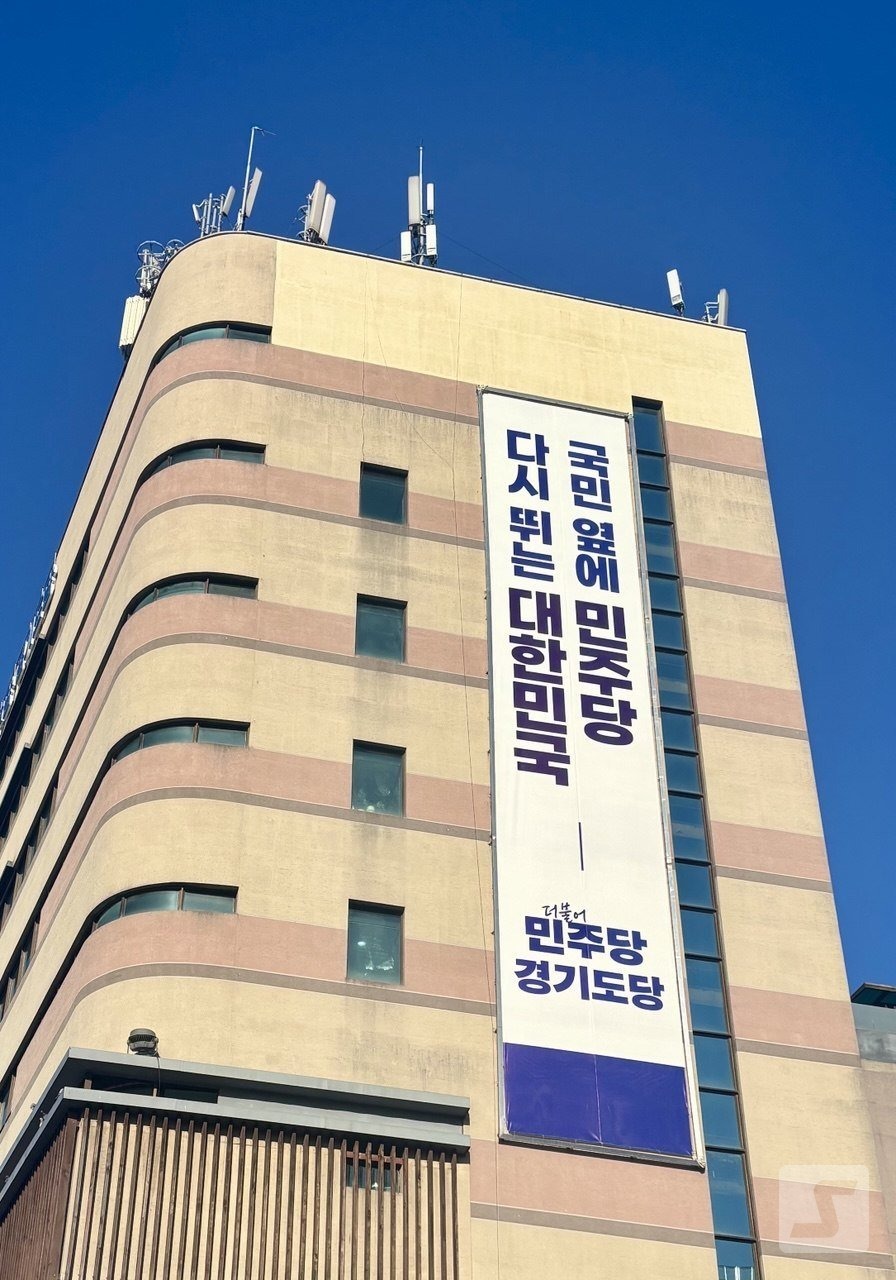
At a rally calling for Governor Choo's resignation held in front of Gyeonggi Province Government building on the 12th, participants who identified themselves as Democratic Party members demanded Governor Choo's voluntary resignation and emergency discipline by the Democratic Party and mentioned recall votes.
Governor Choo faces a state audit of Gyeonggi Province by the Administration and Safety Committee of the National Assembly on the 13th, and Kim's confirmation hearing is scheduled for the 14th.
With Chairman Kim signaling a 'political judgment' after the confirmation hearing, if actual discipline is pursued, how the political conflict will be judged under which grounds of party rules and what procedures will be applied is expected to be a key issue.
Loading comments…