



From Flood Prediction to Smart Bus, How Far Has Gwangmyeong Smart City Come?
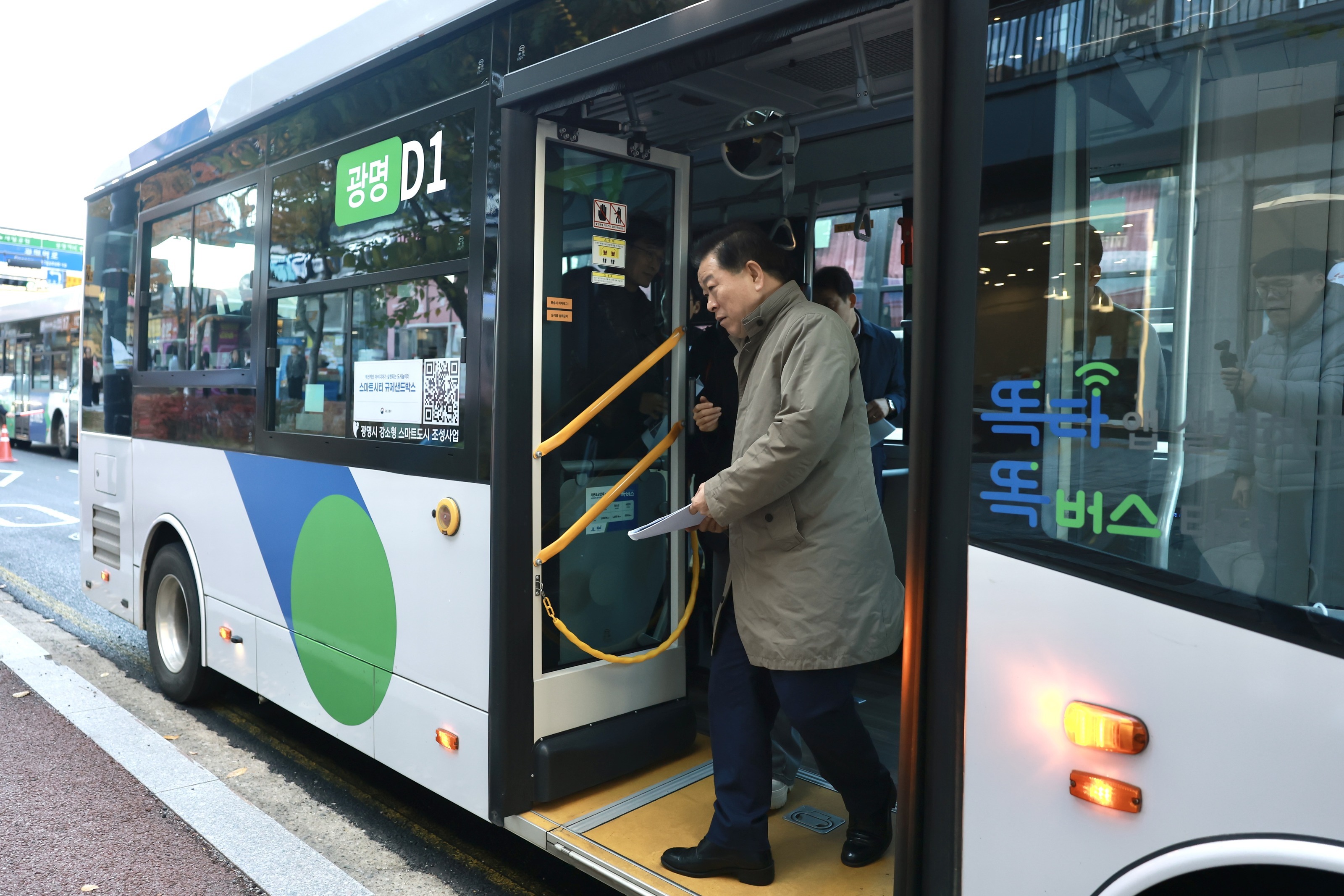
Gwangmyeong Mayor Park Seung-won visited and inspected the implementation site of the "Compact-sized Smart City Development Project" with citizens on the 6th. The inspection was conducted to verify from citizens' perspective whether actual effectiveness is being ensured and what areas need improvement.
The inspection was attended by about 40 people including Vice Mayor Choi Hye-min, heads of relevant departments and divisions, citizens, and consortium members executing the project, who conducted a thorough examination.
They visited the Artificial Intelligence Internet of Things (AIoT)-based integrated flood and inundation management control system located in Ha-an-dong. They checked the operational status of detection equipment such as smart manholes and ground-level water level gauges, and examined the disaster management system that proactively predicts and responds to flooding risks by utilizing weather and water level data.
Subsequently, they visited the site designated for renewable energy resource power generation at the Soha Drainage Pump Station and confirmed plans for installing 250㎾ solar power generation facilities.
They traveled from Gwangmyeong Memorial Park to Il-jik-dong by boarding the "Smart Bus," an eco-friendly demand-responsive transit (DRT) service. The Smart Bus, operated with eight electric vehicles, improved mobility convenience for residents of Il-jik-dong, Hag-on-dong, and Soha 2-dong, which had relatively low accessibility to public transportation, and enhanced accessibility to major subway stations.
They visited an electric two-wheeler battery exchange station (BSS) installed at a convenience store in Il-jik-dong and directly demonstrated the battery exchange process while confirming user convenience. The facility was installed at 10 convenience stores for delivery workers.
Near Bit-ga-on Elementary School, they examined the fog spray function of an Internet of Things (IoT)-based eco-friendly barrier (green barrier) that separates sidewalks from roadways.
Mayor Park said, "The value of a smart city lies in how much its technology makes citizens' daily lives more convenient and safe," adding "We will reflect improvement opinions felt during use in the project and create a smart city where citizens experience change."
The city was selected for the Ministry of Land, Infrastructure and Transport's "Compact-sized Smart City Development Project" contest in 2024 and is proceeding with and preparing 10 smart services across four major sectors—energy, transportation, safety, and data—to respond to climate crisis, with a total scale of approximately 18 billion won including 8 billion won in national funding, 8 billion won in municipal funding, and private investment.
Loading comments…