



Education Gyeonggi Province Office of Education Holds Public Hearing on 'AX Gyeonggi Education Transformation'…"Evaluation Guidelines and Gap Reduction Must Come First" for AI Classroom Introduction
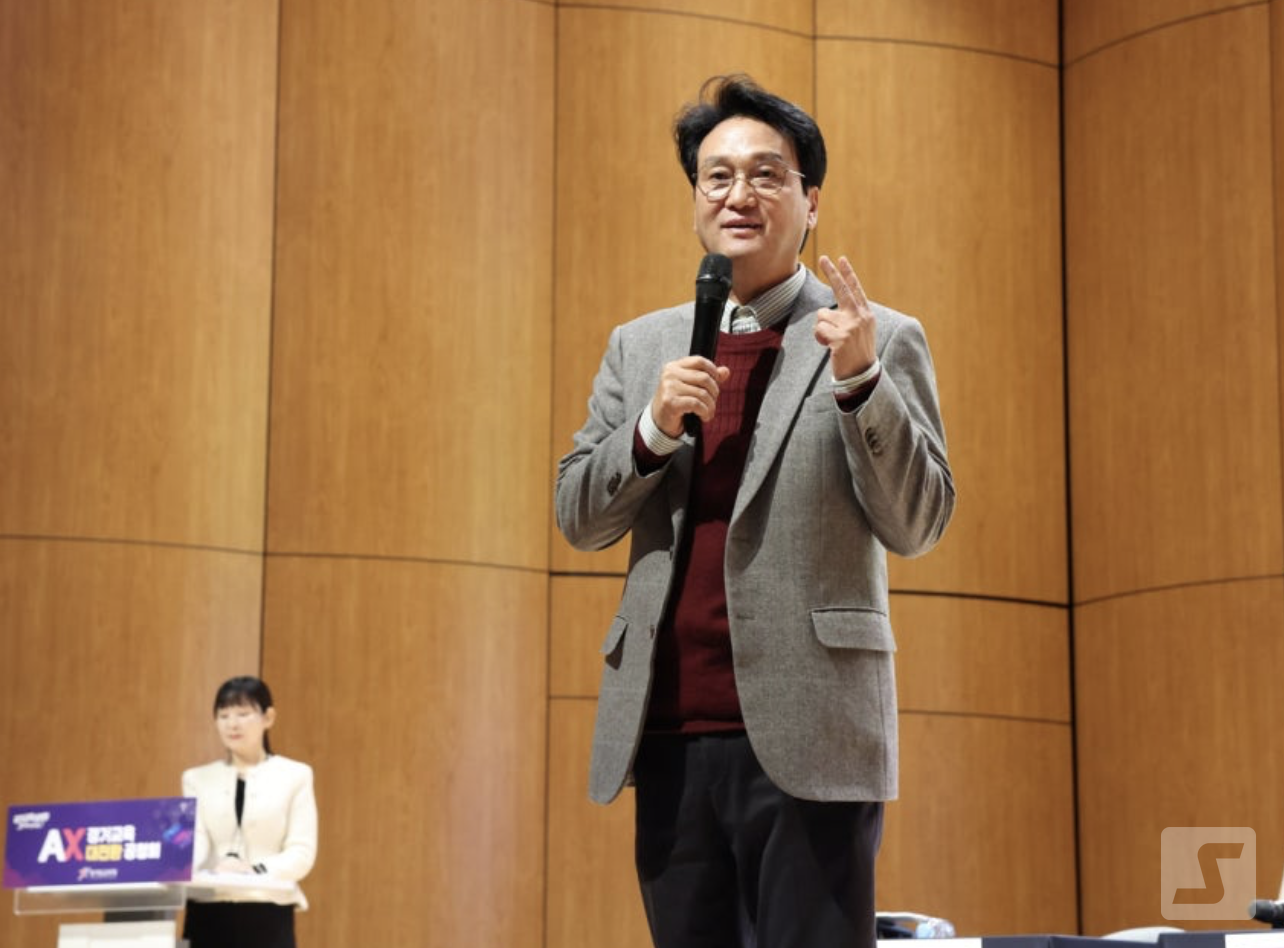
As generative artificial intelligence (AI) continues to penetrate educational settings, education stakeholders gathered to discuss the 'AX Gyeonggi Education Transformation' policy being promoted by the Gyeonggi Province Office of Education.
Participants agreed on the need to preserve students' critical thinking and the necessity of AI utilization, but unanimously emphasized that practical measures must be prioritized, including the establishment of criteria for performance evaluation misconduct and easing the instructional burden on teachers.
On the 9th, the Gyeonggi Province Office of Education held the 'AX Gyeonggi Education Transformation Public Hearing' at the Grand Hall of the Southern Office with approximately 400 attendees including teachers, parents, students, and education experts. The hearing was organized to facilitate public discussion on a draft detailed guideline that would differentiate AI tool access rights according to cognitive development stages rather than applying uniform digital standards to all students.
Teachers voice concerns about burden of distinguishing "AI ghostwriting"…Parents worry about overdependence
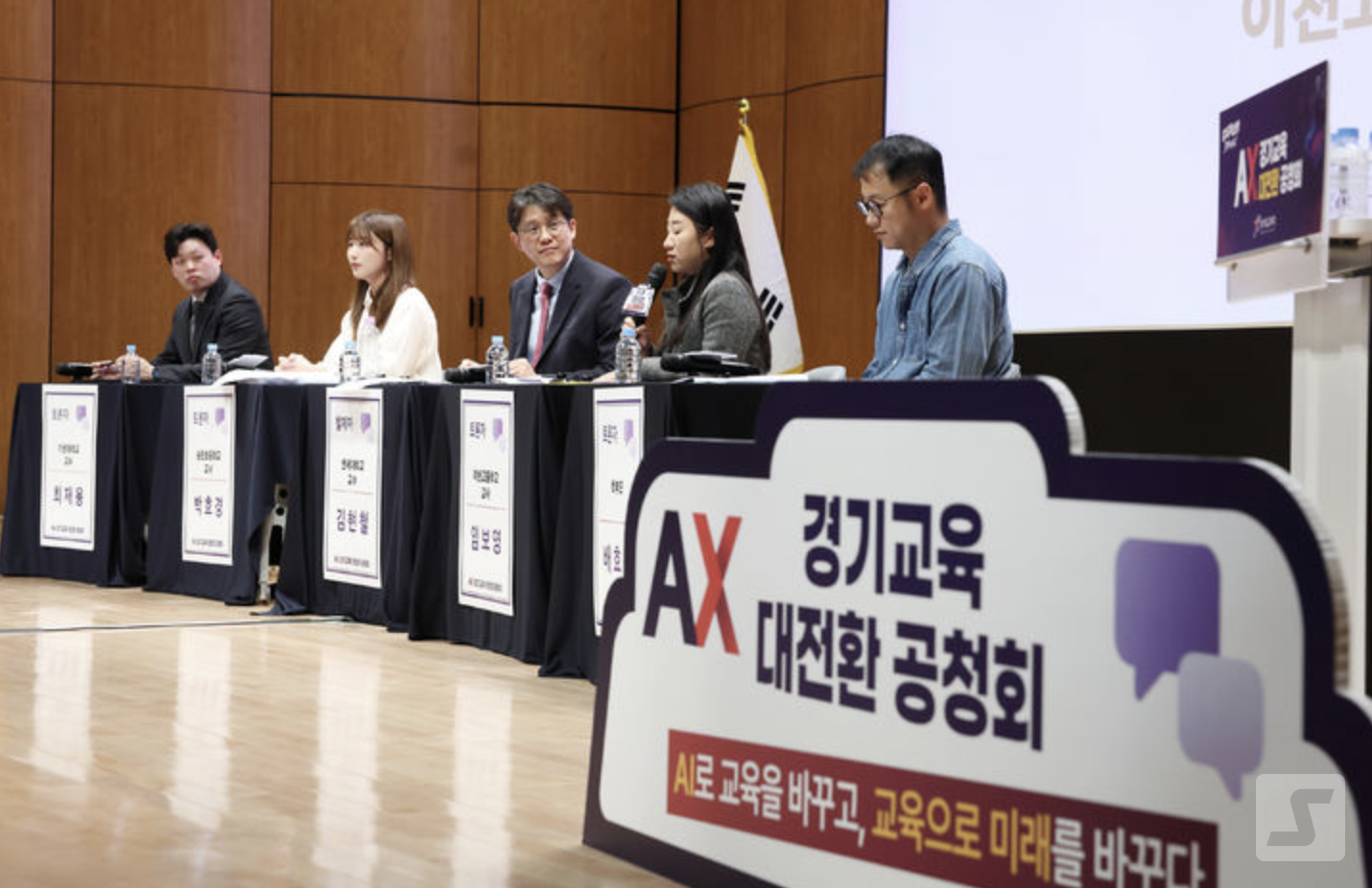
At the hearing, the stage-specific differentiated application plan (▲Elementary: educational AI use under teacher supervision ▲Middle school: limited use within designated scope ▲High school: autonomous use with ethical self-verification premise) itself was evaluated as reasonable by many. However, various challenges in actual implementation were raised repeatedly.
In-service teachers particularly identified verification limitations in performance assessments that are reflected in grades as the biggest obstacle. One elementary school teacher stated, "It is technically impossible to fully determine whether assignments written by students used AI or represent the results of independent inquiry," and advocated that "urgent establishment of clear guidelines for determining misconduct and creation of verification frameworks for teachers is necessary."
Parents supported stage-specific restrictive measures but expressed caution about side effects. One parent said, "Use of general-purpose AI by elementary school students whose critical thinking is not yet developed can lead to acceptance of biased information or digital addiction," and requested that "digital ethics education must be conducted in parallel to reduce in-home instructional burden."
Experts warn against "prohibition rather than developing 'questioning ability'…Need to establish assessment system reform"
Meanwhile, edtech and education experts cautioned against policies focused solely on control or regulation. An education professor attending the hearing emphasized, "Unconditionally suppressing AI use goes against the times," and stressed that "we must achieve comprehensive systemic improvement by moving away from existing evaluation methods focused on final products and shifting to 'process-oriented evaluation' that comprehensively assesses students' problem-solving processes as they interact with AI."
Additionally, suggestions were made that practical teacher training program systems and enhanced security networks are necessary to ensure that disparities in digital infrastructure among schools and regions do not translate into opportunity gaps for students.
A Gyeonggi Province Office of Education official stated, "We will actively reflect the voices of teachers, parents, and experts raised at the public hearing to supplement the guidelines," and added, "We plan to officially announce specific action plans and the final policy vision at the 'AX Gyeonggi Education Transformation Declaration Ceremony' scheduled for January 5, 2027."
Loading comments…