



Gyeonggi Province's Available Finances Plunge by 2 Trillion Won Despite Three-Year-Old Fiscal Crisis Warning
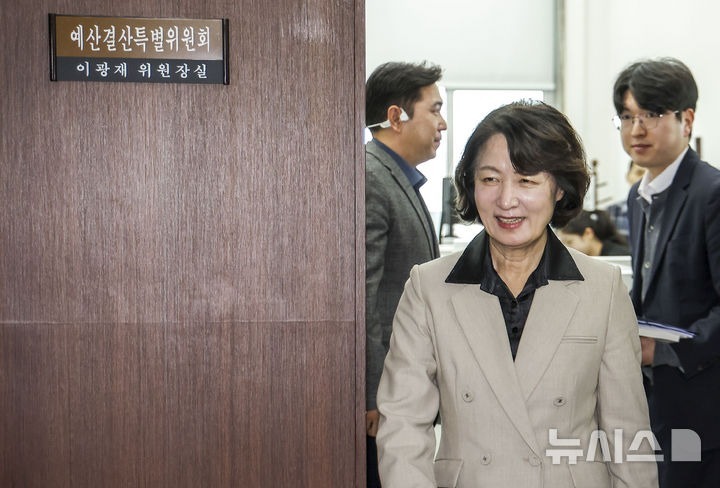
As Gyeonggi Province projects its available finances to decline by 2 trillion won compared to this year in 2027, attention is focusing on how the fiscal crisis has deepened despite warnings from years ago about acquisition tax declines and potential financial deterioration.
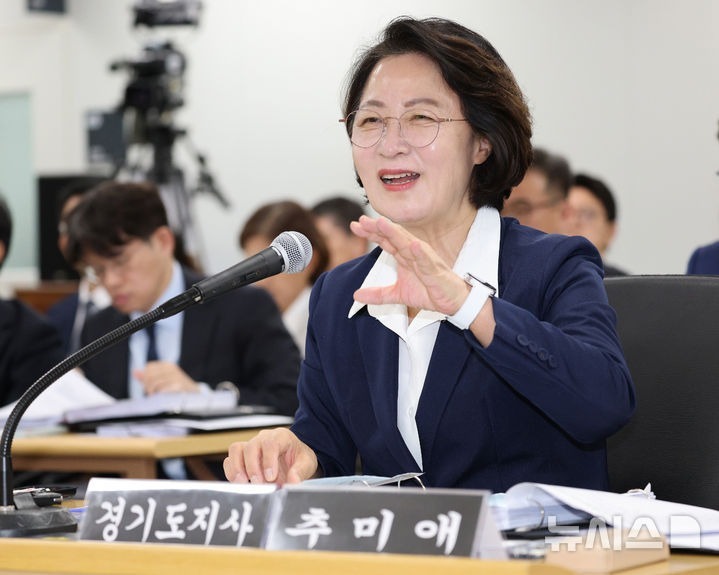
According to Gyeonggi Province and the Gyeonggi Provincial Council on the 27th, Governor Choo Mi-ae stated the previous day that "available finances for next year are expected to decline by as much as 2 trillion won from 3.5 trillion won this year." If projections materialize, available resources in 2027 will be 1.5 trillion won, a 57.1% decrease from this year.
Available finances refer not to the entire budget but to financial resources the province can utilize according to its policy judgment, excluding mandated expenditures and other legally required outlays. The province explains that out of a total budget of approximately 41.7 trillion won, it can independently utilize only 3.5 trillion won based on this year's figures.
The problem is that this fiscal crisis did not emerge suddenly.
The Gyeonggi Research Institute, a provincial affiliate, already warned in February 2023 through its research findings on "Gyeonggi Province's Local Tax Revenue Projections and Fiscal Management Methods" of fiscal risks stemming from an unstable tax revenue structure centered on acquisition tax and increases in mandated and obligatory expenditures.
The institute analyzed that while acquisition tax revenue is declining due to reduced real estate transactions, the proportion of legally and mandatorily required expenditures is increasing, making it difficult to manage medium and long-term fiscal balance.
Accordingly, it proposed improving the structure of continuously increasing operational costs and securing stable tax sources through discovery of acquisition tax taxable subjects and raising local consumption tax rates.
From that point on, two factors of fiscal crisis—revenue decline and expenditure increase—were identified together. In fact, thereafter, Gyeonggi Province's local tax revenue repeatedly fell short of initial budgets.
According to meeting records of the Gyeonggi Provincial Council's Public Administration and Security Committee from the 8th of last month, Kim Min-ki, senior policy specialist, revealed that actual local tax revenue collection in 2022 and 2023 fell short of the original budget by 1.4077 trillion won and 1.3828 trillion won, respectively.
In 2024, the difference between original budget and actual revenue collection was only 0.11%, but in the second supplementary budget for 2025, local tax revenue was reduced by 800 billion won, and 300 billion won was reduced in the 2026 budget as well, he pointed out.
Specialist Kim emphasized the need to improve accuracy in revenue estimates, noting that overestimating local tax revenue in the original budget could lead to excessive expenditure budgets, making subsequent project adjustments or reductions inevitable.
While warnings of revenue decline continued, the province expanded issuance of local bonds and fund utilization.
Local bonds issued three times over 2025 totaled 943 billion won, reaching 99.6% of the issuance limit of 946 billion won. Resources mobilized from various funds through the Integrated Financial Stabilization Fund consolidated account to the general account and others amounted to approximately 558.8 billion won.
Nevertheless, it was revealed that this year, some livelihood projects were budgeted for only nine months instead of 12 months. At that time, Governor Choo explained that a budget cut supplementary appropriation of approximately 770 billion won was necessary.
The province announced results of its fiscal crisis resolution strategy task force activities on August 31, revealing that integrated fiscal deficits exceeding 1 trillion won have occurred annually since 2022.
The province announced it would review next year's budget from scratch and promote sunset provisions for overlapping projects, mandatory fundraising plans for new projects, and revenue expansion.
However, many of these measures align with the concerns about revenue structure improvement and fiscal management efficiency that the Gyeonggi Research Institute raised in 2023.
The current fiscal crisis cannot be fully explained by acquisition tax decline alone. According to the province's settlement data, acquisition tax collection in 2025 was 7.8473 trillion won, falling far short of the peak of 10.9302 trillion won in 2021. However, total provincial tax collection in 2025 was 15.3615 trillion won, an increase of approximately 719.6 billion won from 14.6418 trillion won in 2023.
Despite partial recovery in total provincial taxes, the continued fiscal crisis appears to stem from increased mandated expenditures and expenditure and financial resource acquisition structures involving local bonds and fund operations as well.
The province itself points to an unstable tax revenue structure centered on acquisition tax and rigid expenditure structures including welfare projects, national treasury matching projects, and coordinated transfer payments to cities and counties as causes of the fiscal crisis. It is also demanding tax system reforms at the central government level, such as expansion of local consumption tax and allocation of a portion of corporate tax to local governments.
However, based solely on currently available explanations, it is difficult to determine how much of the 2 trillion won reduction in available resources in 2027 is accounted for by local tax decline, increased national treasury subsidy project burden, expanded mandated expenditures, and debt repayment obligations, respectively.
Separate from the 2 trillion won decline projection revealed by Governor Choo, the province anticipates a shortage of approximately 1 trillion won in available resources compared to previous years, even when mobilizing available debt-related resources such as local bonds and funds to the maximum.
A provincial official stated, "The 2027 original budget has not yet been confirmed, and we plan to secure additional finances and adjust budgets by project until we submit a budget proposal to the provincial council in November."
Loading comments…